



Introduction: The Dawn of the "Pet-Centric" Era
As we stand at the threshold of 2026, the humble cat bowl has completed a decade-long transformation. What was once a simple plastic dish has evolved into a sophisticated health hub. With CES 2026 just days away in Las Vegas, the global conversation in pet technology has shifted from mere "automation" to "predictive intelligence."
Understanding the smart cat feeder evolution requires us to look back at the technological leaps that brought us here. This journey is not just a story of mechanical convenience, it is a narrative of how data, sensors, and Vision AI are finally solving the age-old challenges of the multi-cat household.
Phase 1: The "Dumb" Hopper (Pre-2015)
Solving Quantity, Ignoring Quality
In the early days, the primary goal of pet technology was "quantity." The industry was dominated by Gravity Feeders—simple, non-electronic reservoirs that relied on basic physics to refill the bowl as the cat ate.
The Reality of the Era:
- Zero Control: These devices solved the problem of a pet parent being late for dinner, but they introduced a host of new issues.
- The Obesity Crisis: Without portion control, gravity feeders led to "vacation binge-eating."
- Food Degradation: Kibble sitting in open hoppers for days became stale, oxidized, and lost its nutritional value.
- Hygiene Gaps: These designs were often hard to clean, leading to "feline acne" and bacterial growth.
- In 2026, these devices are seen as the "analog" relics of a bygone era, suitable only for the most basic of needs.
Phase 2: The Logic Era (2015–2022)
The IoT Boom and the Digital Schedule
Around 2015, the industry hit its first major technological milestone. The mass-market availability of low-cost Wi-Fi modules allowed the first generation of "Smart Feeders" to enter our homes. This was the era of Digital Scheduling and Cloud-to-Device (C2D) communication.
Key Breakthroughs:
- Remote Management: For the first time, pet parents could set precise portions down to the gram via a smartphone app.
- The End of Early Morning Wake-ups: Feeders could be programmed to dispense "breakfast" at 5:00 AM, allowing owners to sleep in.
- Notification Culture: We began receiving pings when a meal was successfully served.
- Remaining Challenges: Despite the "smart" label, these machines were still "blind." They knew the food was dispensed, but they had no way of knowing if the cat actually ate it, or if the "household bully" had stolen the meal from a more submissive sibling. The technology managed the device, but it didn't yet understand the pet.

Phase 3: The Sensor Revolution (2023–2025)
Multi-Sensor Fusion and Health Monitoring
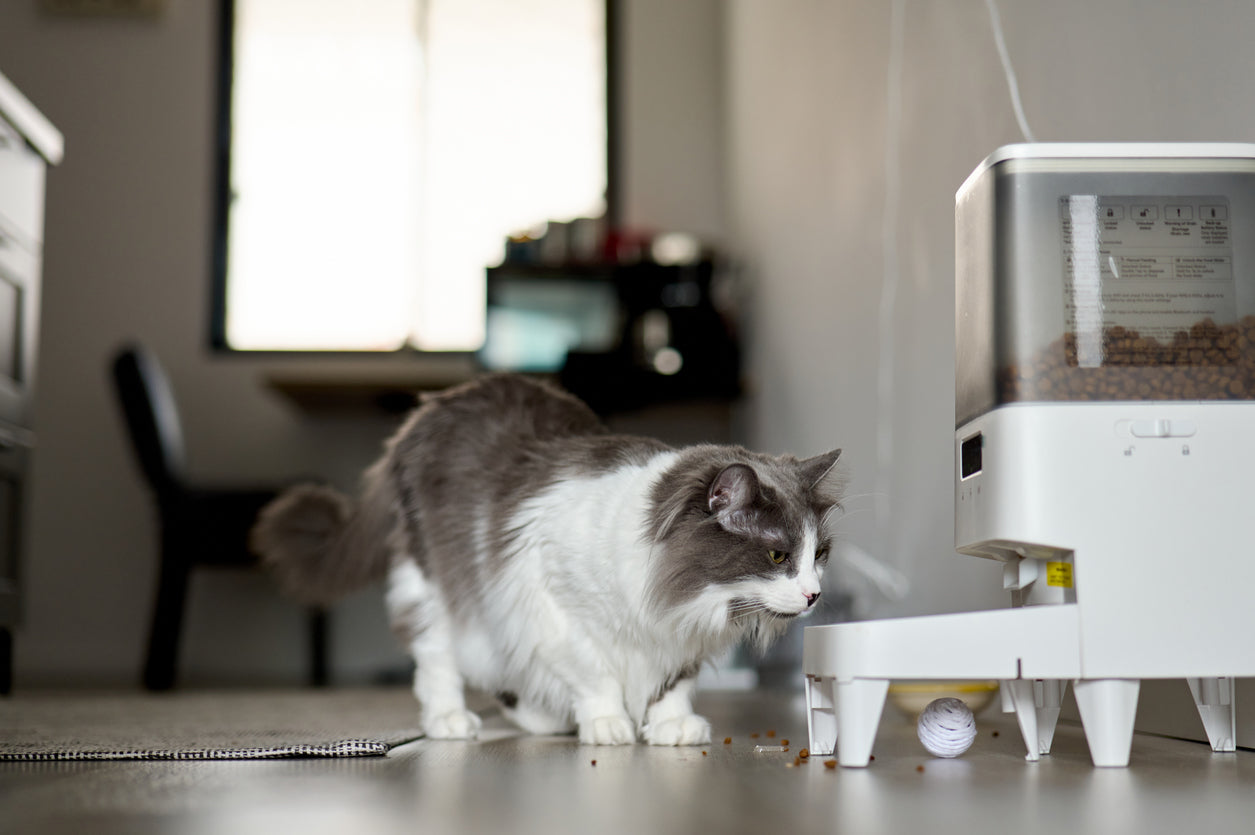
Starting in 2023, we witnessed a shift toward Multi-Sensor Fusion. Feeding devices began to gain "senses." High-precision weight sensors (load cells) were integrated into the base, and basic infrared sensors were added to monitor kibble levels in real-time.
The Impact on Pet Care:
- Data-Driven Decisions: We moved beyond "when" the food was delivered to "how much" was actually consumed.
- Early Warning Signs: As noted by the Cornell Feline Health Center, even a slight decrease in appetite can be an early indicator of serious underlying issues like hepatic lipidosis or renal distress. If a cat typically eats 50g but suddenly drops to 20g, the app alerts the owner.
- The Struggle for Identity: This phase saw the introduction of RFID collar tags to solve multi-cat issues. While effective, many cats found the tags bulky or uncomfortable, creating a barrier to universal adoption.
Hygiene also became a central theme in late 2025, with brands focusing on stainless steel inserts and detachable hoppers to prevent the "black chin" syndrome (feline acne).
Phase 4: 2026 – The Peak of Smart Cat Feeder Evolution
The Age of Vision AI & Predictive Care
As we enter 2026, we are witnessing the "Grand Convergence" of Computer Vision and Generative AI. This is the era that will define the showcases at CES 2026. The focus has moved from reacting to data to Predictive Care.
1. Zero-Error Identity Recognition (Collar-Free)
The 2026 standard for high-end feeders has moved beyond collars. Utilizing Vision AI, devices can now distinguish between different cats in milliseconds based on facial features, body shape, or unique coat markings. This ensures that the "separate feeding" needs of a multi-cat home are met with 100% accuracy and zero feline stress.
2. Behavioral Health Analytics
Modern AI doesn't just recognize the cat; it analyzes the behavior. By tracking "eating velocity" (how fast they chew) and "visit frequency," AI can now detect the subtle signs of:
- Dental pain or gingivitis.
- Early-stage kidney disease (indicated by changes in appetite).
- Metabolic changes or diabetes.
3. Integrated Freshness Tech
2026 models feature triple-lock freshness systems, utilizing vacuum-sealed lids and bionic dispensing rotors that prevent air from entering the hopper, ensuring every kibble is as crunchy as the day the bag was opened.
Why This Evolution Matters for the Modern Pet Parent
The smart cat feeder evolution represents a fundamental shift in the pet-parent relationship. We are moving from being "providers" to being "informed guardians."
In a 2026 world, a feeder is no longer just a gadget; it’s a 24/7 virtual veterinary assistant. The data collected will likely become the most valuable piece of information you take to your annual vet check-up. Instead of telling the vet, "I think he's eating fine," you can show them a year's worth of precise caloric and behavioral data.
For those with multiple cats, this technology finally restores peace. No more guarding bowls, no more separate rooms, and no more food theft.

The Future of Feline Nutrition: Cheerble Match G1
The history of pet technology has led us to this pivotal moment. The goal of modern pet care is no longer just to feed, but to truly understand. We are moving toward a world where your home adapts to your cat, providing a tailored environment that mimics their natural instincts.
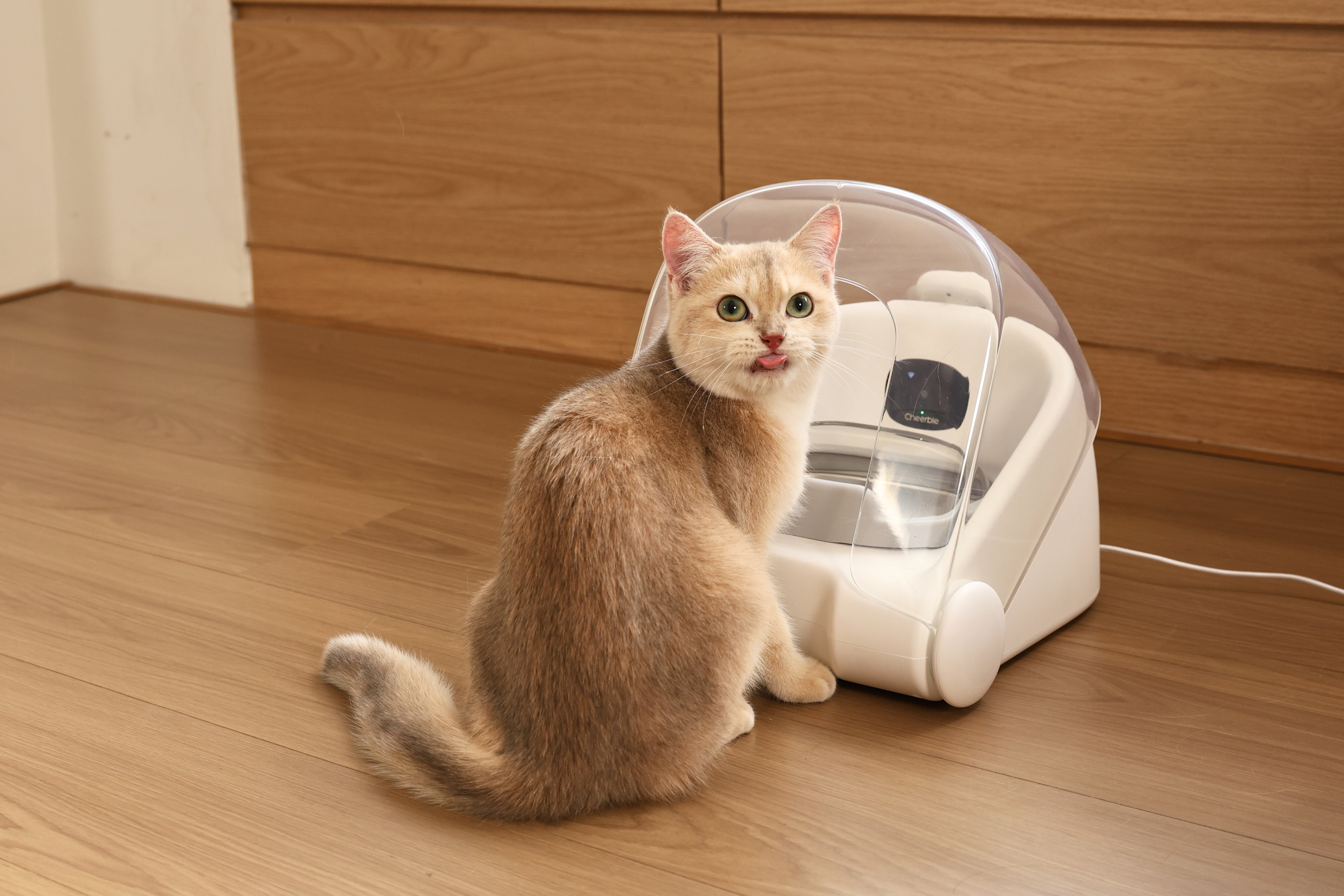
Cheerble Match G1 is our answer to this evolution. As the ultimate new-era cat feeding solution, it redefines how we manage feline nutrition. By leveraging the power of Naked Recognition and AI, the Match G1 provides a level of precision that traditional feeders cannot match.
The future of cat care is no longer a concept; it is a reality. We invite you to experience how we are using technology to see, understand, and serve our cats in their most natural state.
Common Questions: The Evolution of Feeding
Q1: Why should I upgrade if my programmable feeder still works?
While older feeders manage "time," 2026-era feeders manage "health." If you have multiple cats or a cat with specific health needs, the ability to track eating patterns and ensure the right cat gets the right food is a game-changer for longevity.
Q2: Is AI in a cat feeder just a marketing gimmick?
Not at all. In 2026, AI is the engine behind "Vision Recognition." It eliminates the need for uncomfortable RFID collars and provides the data processing power needed to detect health anomalies weeks before they become visible to the human eye.
Q3: Is it difficult to set up these advanced 2026 devices?
Actually, the trend is toward simplicity. Most 2026 devices utilize "Auto-Pairing" and intuitive apps that guide you through a 60-second setup. They are designed to be user-friendly for everyone, not just "techies."
Q4: How does hygiene factor into the latest evolution?
Hygiene is now a hardware priority. The latest evolution phases emphasize modular designs. These feeders are built to be disassembled in seconds, with dishwasher-safe components, solving the "difficult to clean" complaints of earlier generations.

Leave a comment
All comments are moderated before being published.
This site is protected by hCaptcha and the hCaptcha Privacy Policy and Terms of Service apply.