


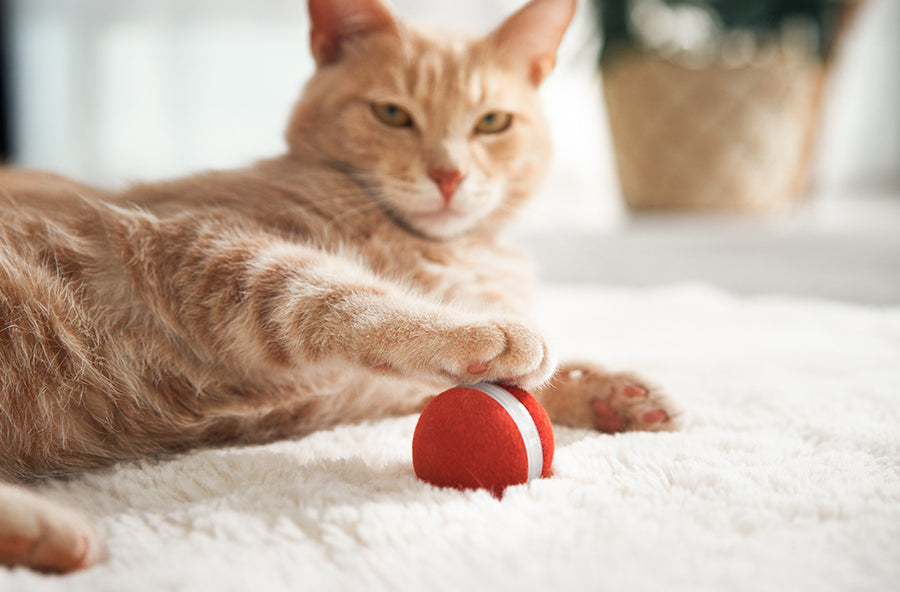
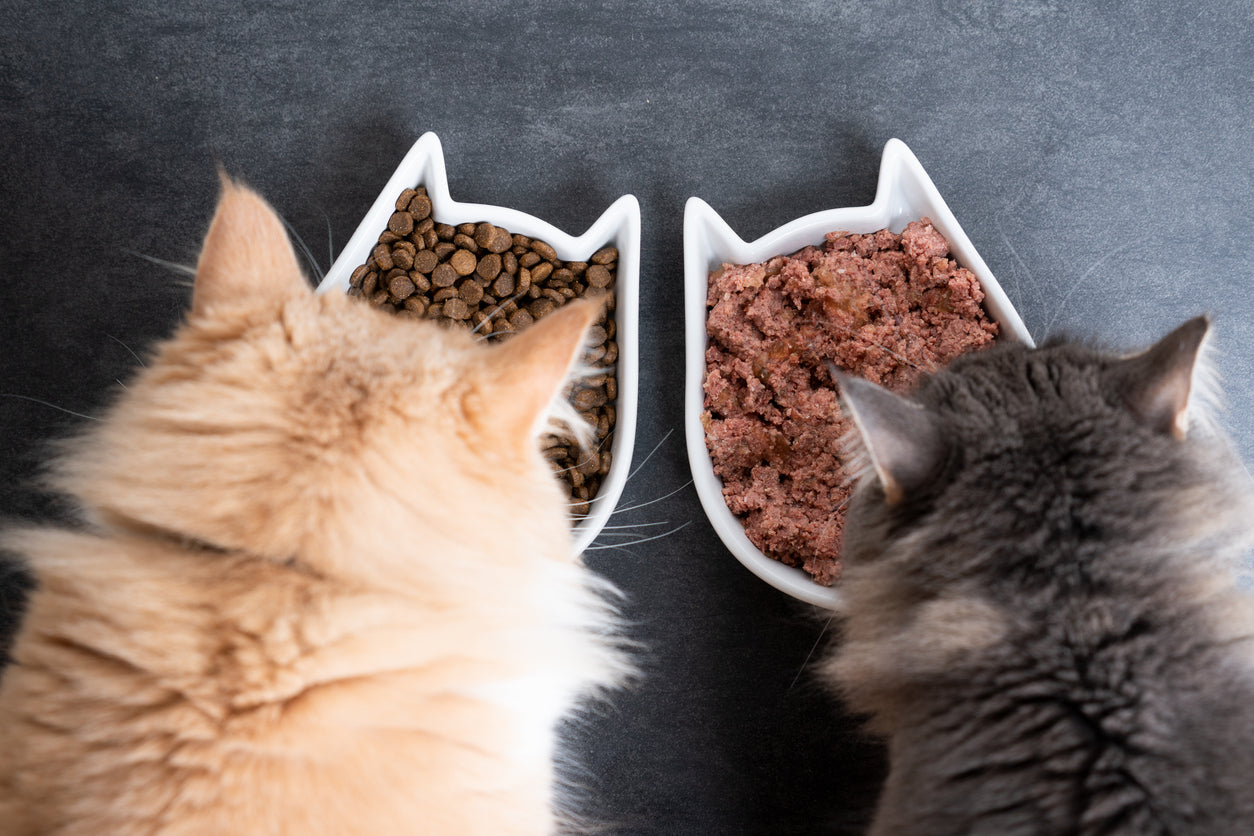
Wet food's moisture content sits around 70 to 80 percent, compared with roughly 7 to 10 percent in dry kibble. Cats fed only dry food drink more from the bowl to compensate, but research shows they still fall short, running more concentrated urine and carrying more hydration risk over time.
A food bag promises "complete and balanced." A water bowl sits untouched for most of the day. Both can be true at once, and the gap between them is exactly where a cat's hydration quietly falls apart.
Cat owners often assume water intake is only about the bowl: how big it is, how fresh it stays, how many are scattered around the house. Diet plays just as large a role, and for a species that barely evolved to feel thirsty, that role might matter more.
The debate over wet versus dry food usually gets framed as a feeding preference. Underneath it, though, sits a hard number: how much moisture actually reaches a cat's body, and whether drinking behavior can ever make up for a diet that doesn't supply enough on its own.
The Real Gap Between Wet and Dry Food
What Moisture Content Actually Means in the Bowl
The IVIS Encyclopedia of Feline Clinical Nutrition puts dry kibble's moisture at just 7 to 10 percent, next to roughly 70 to 80 percent in canned or pouched wet food. That's not a small rounding difference. An 85-gram can of wet food delivers something like 60 grams of water before a cat ever approaches the bowl. The same weight in dry kibble barely registers by comparison, which means almost all of a dry-fed cat's water intake has to come from drinking alone. Weight for weight, wet food just carries more water. A cat would need to eat several times as much dry kibble by volume to match what one serving of wet food supplies, and no cat eats anywhere near that much.
Why the Numbers Don't Balance Out at the Water Bowl
Cats on dry food do drink more from the bowl than cats on wet food, just not enough to close the gap. Researchers at the Waltham Centre for Pet Nutrition tested this directly: cats fed a diet with only 6.3 percent moisture produced noticeably more concentrated urine than cats fed the same diet hydrated to 73.3 percent, even though the dry-fed group drank more water on its own. Extra sips from the bowl helped, but they never fully replaced what a wetter diet supplied automatically. Not every dry-fed cat becomes dehydrated overnight. But over months and years, that gap adds up, especially for cats already prone to urinary or kidney issues.

Why the Body Doesn't Make Up the Difference
A Cat's Low Thirst Drive
Cats descend from desert ancestors that met most of their water needs through prey rather than open water sources, the IVIS Encyclopedia of Feline Clinical Nutrition explains. That evolutionary history left modern cats with a thirst mechanism that simply doesn't fire as urgently as a dog's or a human's. A cat can run a meaningful water deficit before its body signals it's time to drink, which is exactly the window where a dry-only diet does the most quiet damage. That's evolution, not stubbornness. A cat ignoring a full bowl isn't being picky. It's running on instincts built for an environment that rarely offered free water to begin with.
What Happens to Urine and Kidneys Long-Term
That gap shows up most clearly in urine. The same Waltham Centre for Pet Nutrition data found that cats on the driest diet produced urine concentrated enough to sit well within range for calcium oxalate and struvite crystal formation, the two most common types of urinary stones in cats. Cats on the wettest diet produced urine dilute enough to fall close to the safe zone for both. VCA Animal Hospitals ties this same pattern to a broader point: cats with kidney disease, diabetes, or a history of urinary tract issues often do better on extra dietary moisture for exactly this reason. Concentrated urine isn't just a lab number. It's the same environment that lets stone-forming minerals crystallize instead of staying dissolved.
How to Tell If Your Cat's Diet Is Leaving a Hydration Gap
Signs at the Litter Box and Water Bowl
A cat running a diet-driven hydration gap rarely announces it directly. Litter clumps that feel unusually dry and hard, urine with a stronger smell or darker color than usual, and a water bowl that barely drops over several days are the clearest everyday clues. None of these signs is dramatic on its own. That's exactly why they're easy to miss in a cat eating dry food day after day. None of these signs shout for attention. That's the problem.
A Simple Way to Estimate Daily Water Needs
PetMD frames daily water needs at roughly 3.5 to 4.5 ounces per 5 pounds of body weight, counting water from both the bowl and the food. A 10-pound cat eating only dry kibble has to drink nearly all of that amount to hit the target, since the food itself barely contributes. The same cat on a mostly wet diet might already be halfway there before touching a water bowl at all. That's roughly a third of a cup total, combining everything it eats and drinks in a day. Track it for a week and the pattern becomes obvious fast.

Closing the Gap Without an All-or-Nothing Switch
Mixing Wet Food In, Even Partially
A full switch to wet food isn't the only option, and it isn't always practical. AAHA notes that even partial wet food, mixed into a mostly dry diet, still measurably raises total water intake. A cat that eats even one wet meal a day gets a real hydration boost compared with eating dry food exclusively. It doesn't have to be all-or-nothing. A spoonful stirred into dry kibble each day adds up over a month.
Adding Water Directly to Dry Kibble
For cats that refuse wet food outright, adding warm water directly to dry kibble closes part of the same gap, softening the food while raising its moisture content well above the dry baseline. It's not a full substitute for a wet food diet, but it moves a bowl that was contributing almost nothing toward one that actually helps. A quarter cup of warm water stirred into a normal portion is a reasonable starting point. Most cats adjust to the texture change within a few days.
A Smart Fountain for the Dry-Food Stretch
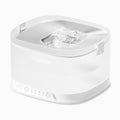
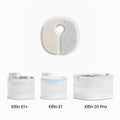
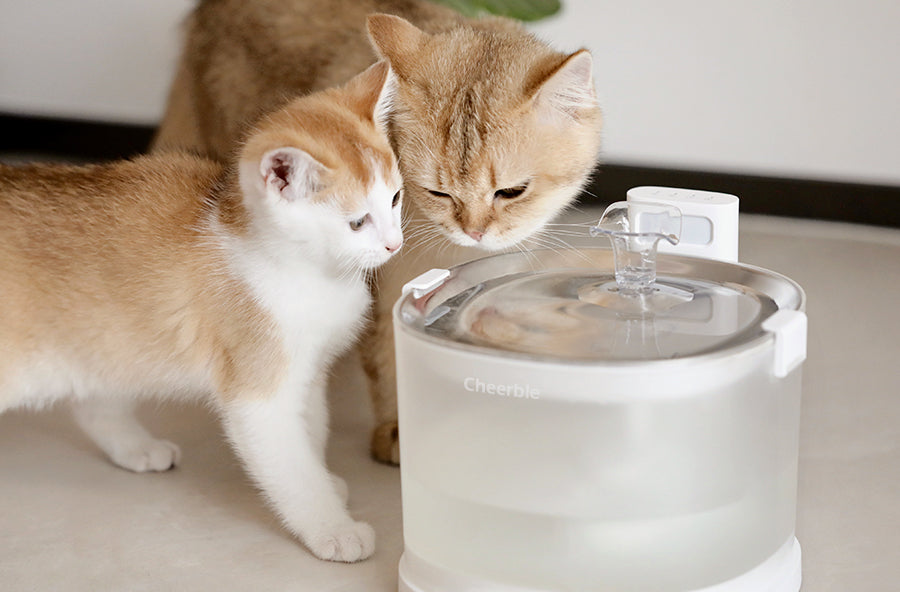
Neither fix touches the water bowl itself, and that's where a fountain earns its place. Elfin E1+ uses a pumpless design with a stainless steel tray to keep water moving and appealing, which matters most for cats eating mostly dry food and leaning hardest on the bowl to close their own hydration gap. Cats also drink more from moving water than from a still bowl, an instinct left over from judging which sources were safe to drink from in the wild.
Conclusion
Wet versus dry food was never really a taste debate. It's a moisture math problem, and dry food starts every day already behind. Mixing in wet meals, adding water to kibble, and keeping the bowl itself appealing all chip away at that gap. A cat doesn't need a perfect diet to benefit, just one that closes more of the difference than it currently does. Diet sets the floor. The bowl decides how close a cat gets to it.
Related reads:

Leave a comment
All comments are moderated before being published.
This site is protected by hCaptcha and the hCaptcha Privacy Policy and Terms of Service apply.