


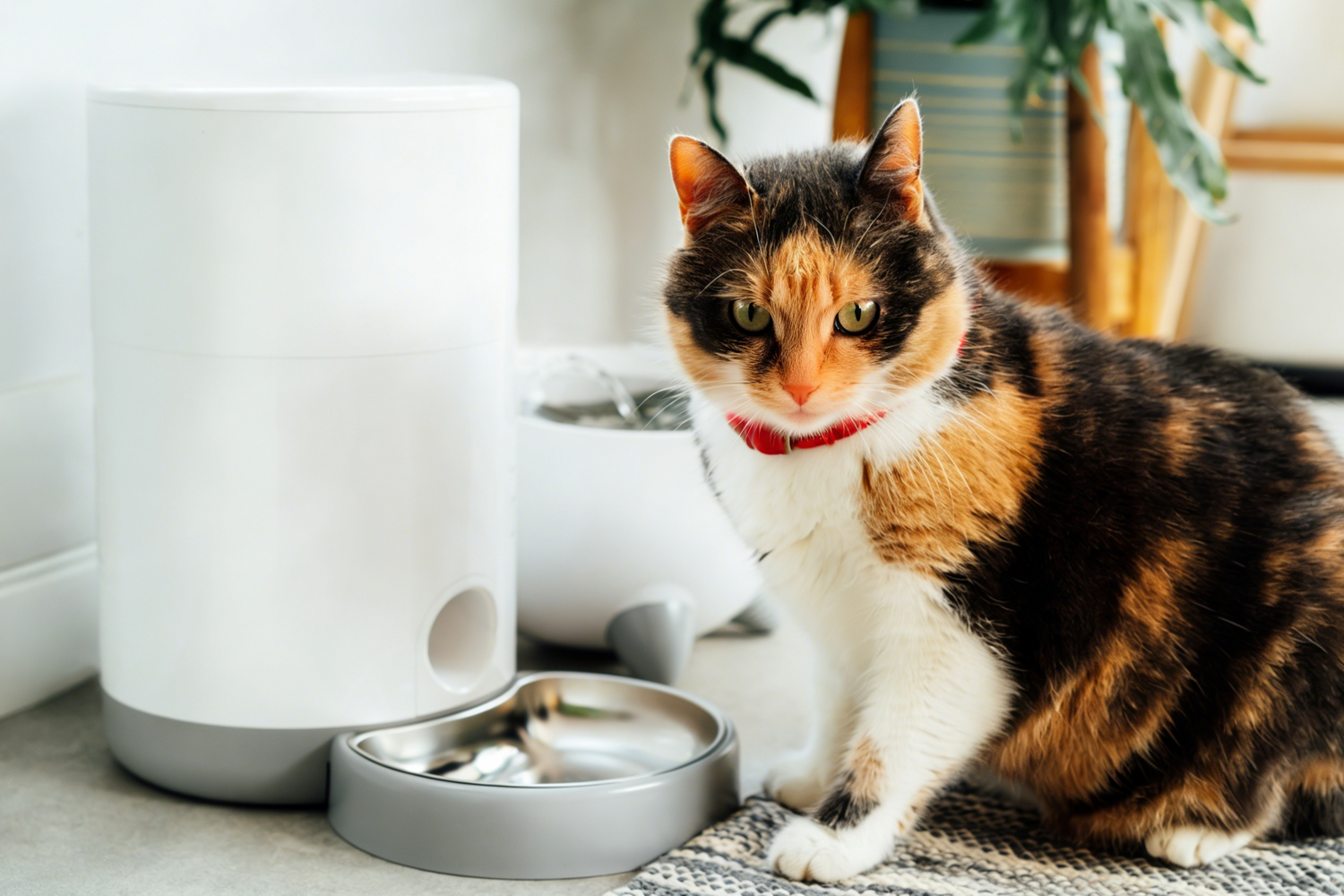
In the world of multi-cat households, mealtime is often less of a peaceful ritual and more of a tactical battlefield. As any multi-cat parent knows, ensuring the right cat gets the right food is a logistical nightmare. Especially when prescription diets or weight management are involved.
The industry’s answer has been selective feeding. But not all identification technologies are created equal. Today, we are moving into a new era of seamless, naked recognition. Let’s break down the evolution of pet recognition tech to see which truly deserves a place in your home.
The Legacy Era: Mechanical and Simple Sensor Solutions
The earliest "smart" feeders relied on basic infrared or magnetic sensors. The logic was binary: if any object blocked the sensor or came within range, the lid opened.
Proximity-Based Access: How Traditional Sensors Work
These devices are essentially "blind." In a household with a greedy tabby and a shy kitten, these feeders simply became another way for the dominant cat to steal food. They lack the intelligence to differentiate between a pet and a person, or even between two pets.
The Safety and Comfort Trade-off
To add a layer of "security," these legacy systems often required cats to wear magnetic charms or heavy sensors on their collars. From a pet behaviorist’s perspective, this is far from ideal.
Collars pose a persistent snagging risk, particularly for active cats that climb or squeeze through tight spaces. Furthermore, many cats suffer from whisker stress when forced to wear clunky hardware just to access their dinner. For the cat, the technology was an obstacle, not a benefit.
The Microchip Era: Moving Toward Digital Identification
Radio Frequency Identification (RFID) was the first real attempt at individual identity. By using the cat’s existing medical microchip, or a lightweight RFID collar tag, the feeder acts like an electronic key.
While it was considered the "gold standard" for years, real-world use reveals significant flaws.
The Hidden Dangers of Wearable Tags
The most immediate drawback is the reliance on physical hardware. Many RFID feeders require a collar-mounted tag to function. For an active cat, a collar is more than just an annoyance; it is a safety hazard.
Cats are natural climbers and explorers. A collar can easily snag on furniture or branches, leading to potential choking or strangulation. Furthermore, many cats find wearable tags uncomfortable, leading to persistent scratching or stress. The risk of a "trapped" cat far outweighs the benefit of a smart bowl.
The Latency Gap and Identity Lag
Even with an implanted microchip, the technical flaw of RFID is the Latency Gap. Because RFID is a passive technology, the sensor often struggles to read the chip unless the cat is at a very specific angle and distance.
This results in a 2-to-3-second delay. In a multi-cat kitchen, those seconds are an eternity. A "food bully" can easily nudge the authorized cat aside, or "shadow" them into the bowl the moment the sensor triggers. Because the system is reactive and slow, it cannot prevent a fast-moving intruder from stealing an expensive prescription meal.

The Visionary Era: Computer Vision and Cat Face ID
Welcome to the age of Pet Biometrics. Much like the Face ID on your smartphone, next-generation feeders now use high-definition cameras combined with Deep Learning algorithms.
Deep Learning: How AI Sees a Cat’s Unique Features
Instead of looking for a chip, the device analyzes the unique feature vectors of your cat. This includes the distance between the eyes, the curve of the muzzle, and specific coat patterns. This is "Naked Recognition" just the cat in its natural, comfortable state.
The Speed of Zero-Contact Recognition
There is no "searching" for a signal. The moment a cat enters the frame, the system identifies them instantly. When the authorized cat approaches, the face ID confirms their identity and the lid opens in a flash.
However, real power lies in its Proactive Defense. If an unauthorized cat ( or even a hungry dog) tries to sneak in, the system recognizes the "intruder" and quickly closes the lid. This instant reaction leaves no window of opportunity for food stealers.
By actively blocking the wrong pet and welcoming the right one, the Face ID ensures your feeding schedule actually works. This will provide a total peace of mind for multi-pet homes.

Smarter, Private, and Reliable: The Edge-AI Ecosystem
A common concern with camera-based tech is privacy. Many "smart" devices stream video to the cloud for processing, creating a potential security hole in your living room.
Breaking the Cloud Dependency
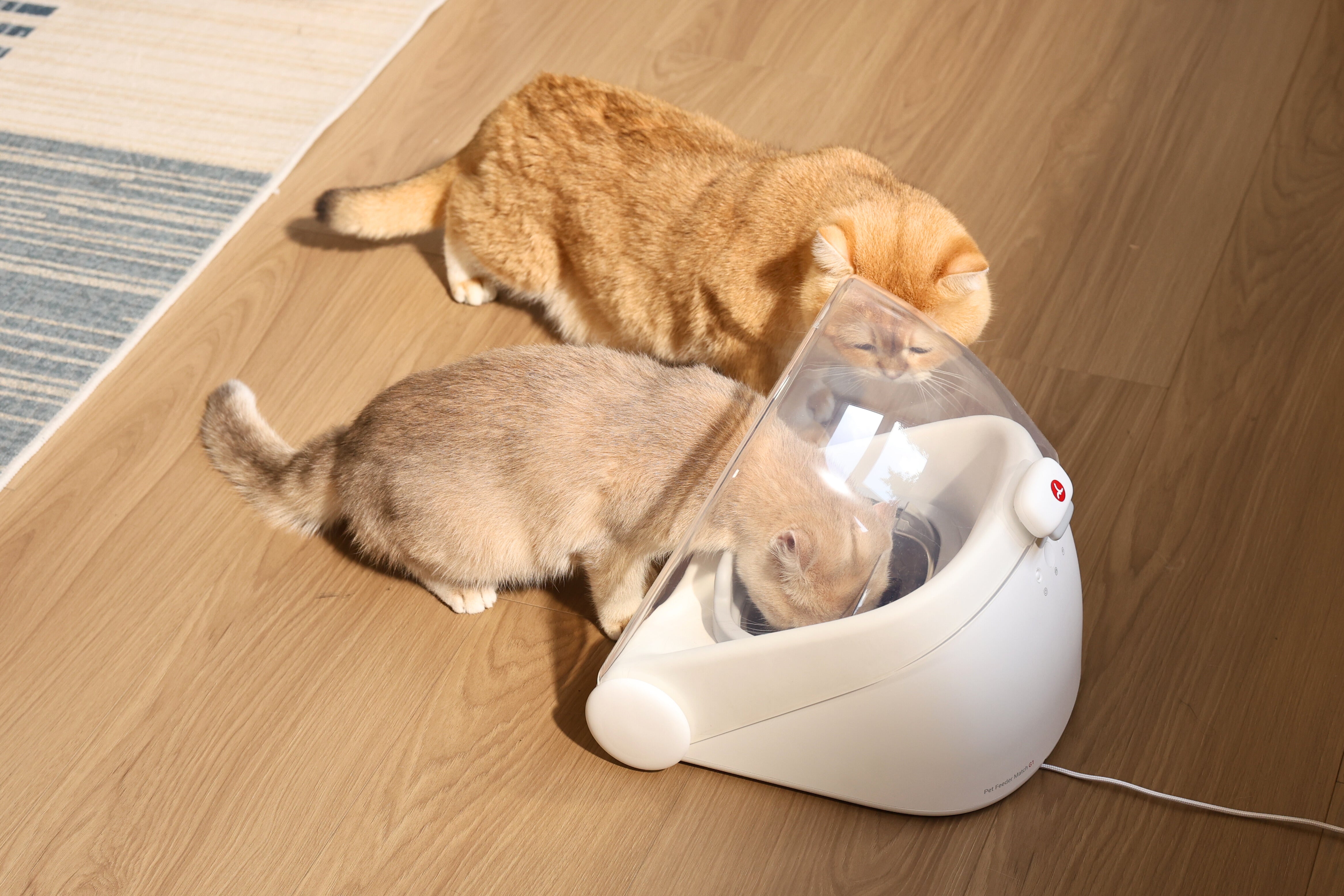
The Cheerble Match G1 avoids this entirely through Edge-AI. All recognition happens on a dedicated local brain within the device. Your cat’s biometric signature stays securely inside the hardware, not on an external server. This ensures that your home remains a private sanctuary while providing the highest level of data security.
Self-Learning AI: Growing with Your Cat
One of the most advanced features of the Match G1 is its ability to automatically learn and evolve. Unlike static systems, the AI model keeps updating every time it identifies a face. This is crucial as kittens grow and their facial structures change over time.
The Match G1 seamlessly adapts to these changes. It update its internal profile without requiring you to manually re-scan or upload new photos. It is a system designed to last for the lifetime of your pet.
Offline Reliability: Why Local Intelligence is More Secure
Standard smart feeders often turn into "dumb" bowls the moment your Wi-Fi hiccups. Because the Match G1 features built-in local logic, it ensures meals run flawlessly even when the internet doesn't.
Whether you are on or off the grid, identity verification happens locally. This level of offline reliability is the hallmark of professional-grade pet tech, ensuring that a router glitch never results in a missed meal or a stolen prescription diet.

Comparison: Which Tech Fits Your Multi-Cat Home?
When choosing between these technologies, we have to look at the long-term value and the daily experience for our pets.
Durability and Maintenance: Tags vs. Algorithms
If you choose RFID, you are committing to a lifetime of hardware maintenance. Tags get lost, batteries in collar charms die. Also the medical chips can occasionally migrate within the cat’s body, making them hard to read.
Face ID, however, is an algorithmic solution. A cat’s facial structure is a permanent, "un-losable" ID. There are no tags to replace and no batteries to change. It is a one-time setup for a lifetime of precision.
The Invisible Benefit: Reducing Feline Stress
Ultimately, the best technology is the kind your cat doesn't even notice. Face ID creates a low-stress environment. It removes the need for collars and eliminates the "lag" that leads to mealtime confrontations.
The Cheerble Match G1 represents the pinnacle of this philosophy. It respects the cat’s autonomy while giving the owner absolute control. In the battle for the bowl, the smartest weapon is the one you can’t see.
It is not just about feeding. It is about providing a safe, individualized nutritional space for every member of your feline family.

Leave a comment
All comments are moderated before being published.
This site is protected by hCaptcha and the hCaptcha Privacy Policy and Terms of Service apply.