

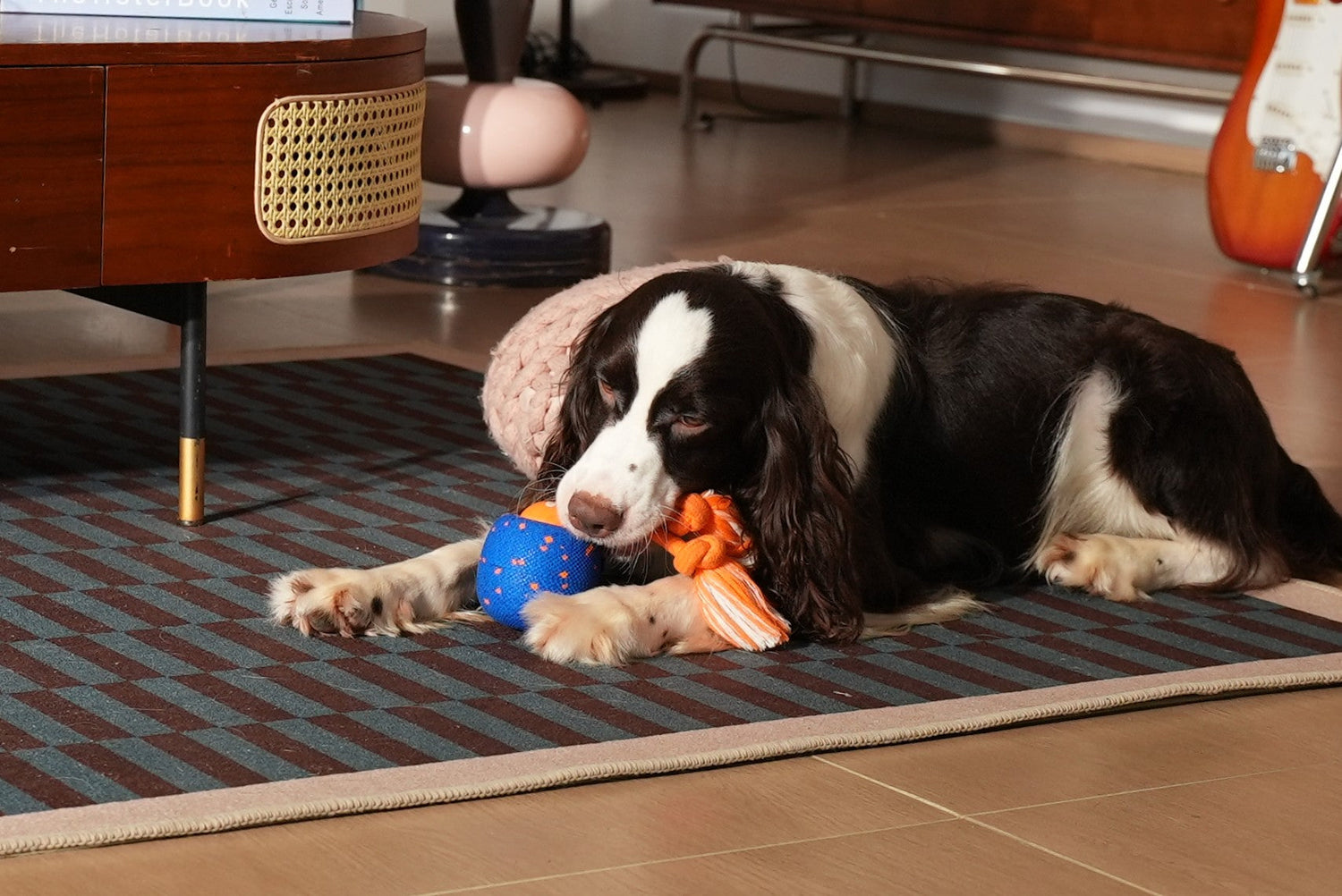
Toys can give an anxious dog something predictable and rewarding to do, but they do not diagnose or cure anxiety. The best toy depends on what triggers the dog, how the dog responds to movement and sound, and whether the dog can still play or eat when stressed.
For mild restlessness, enrichment can support a calmer routine. For panic, self-injury, escape attempts, or severe separation anxiety, the right next step is professional help rather than a more stimulating toy.
Start by Reading the Behavior
Common signs of distress can include pacing, panting when it is not hot, repeated barking, hiding, drooling, destructive escape attempts, or refusing food. Context matters. A dog that chews a cushion after a quiet day may be bored; a dog that scratches a door and panics within minutes of being left may have separation-related distress.
The ASPCA’s separation-anxiety guidance explains that moderate or severe cases usually require gradual desensitization and counterconditioning. Toys may be used within that plan, but they are not a replacement for it.
Which Toys May Help?
Food puzzles for dogs that will eat
A stuffed or food-dispensing toy can create a positive activity during mild stress. Introduce it when the dog is relaxed first. If the dog normally loves food but will not touch the toy during an absence, that response can indicate a higher level of distress.
Chew toys for dogs that settle through chewing
Choose an appropriate size and material, and supervise initial sessions. Replace damaged items. Avoid assuming that “indestructible” marketing means a toy is safe for every chewing style.
Interactive movement for dogs that enjoy chasing
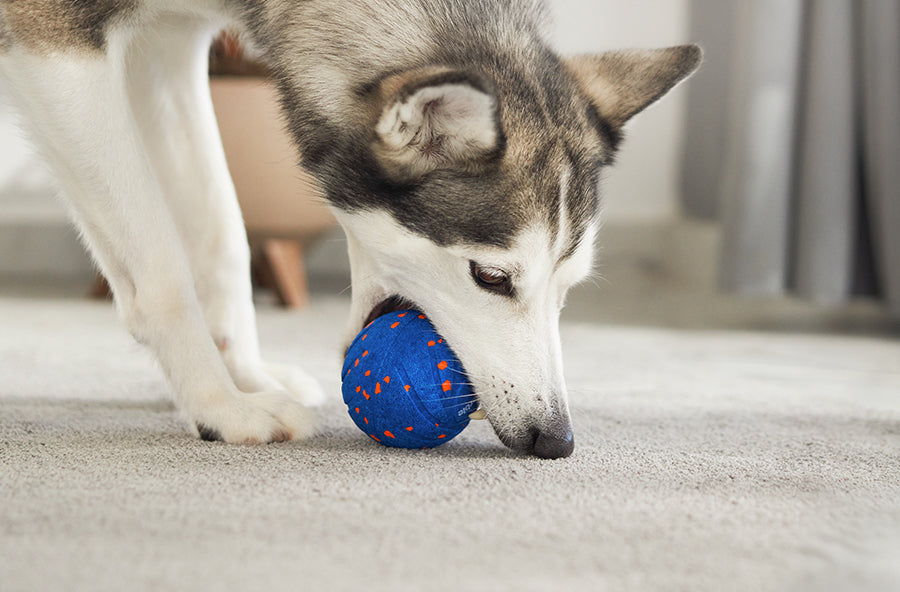
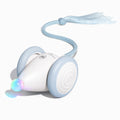
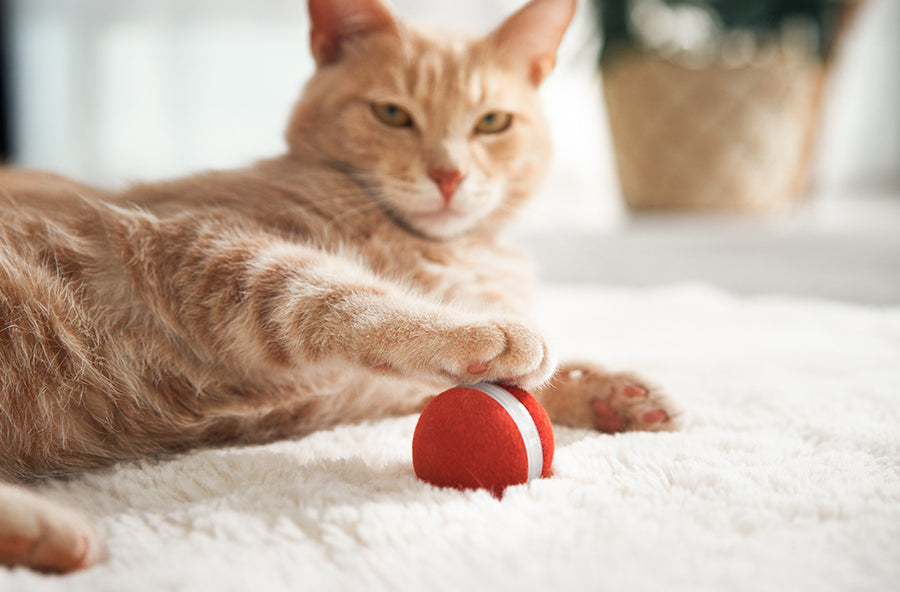
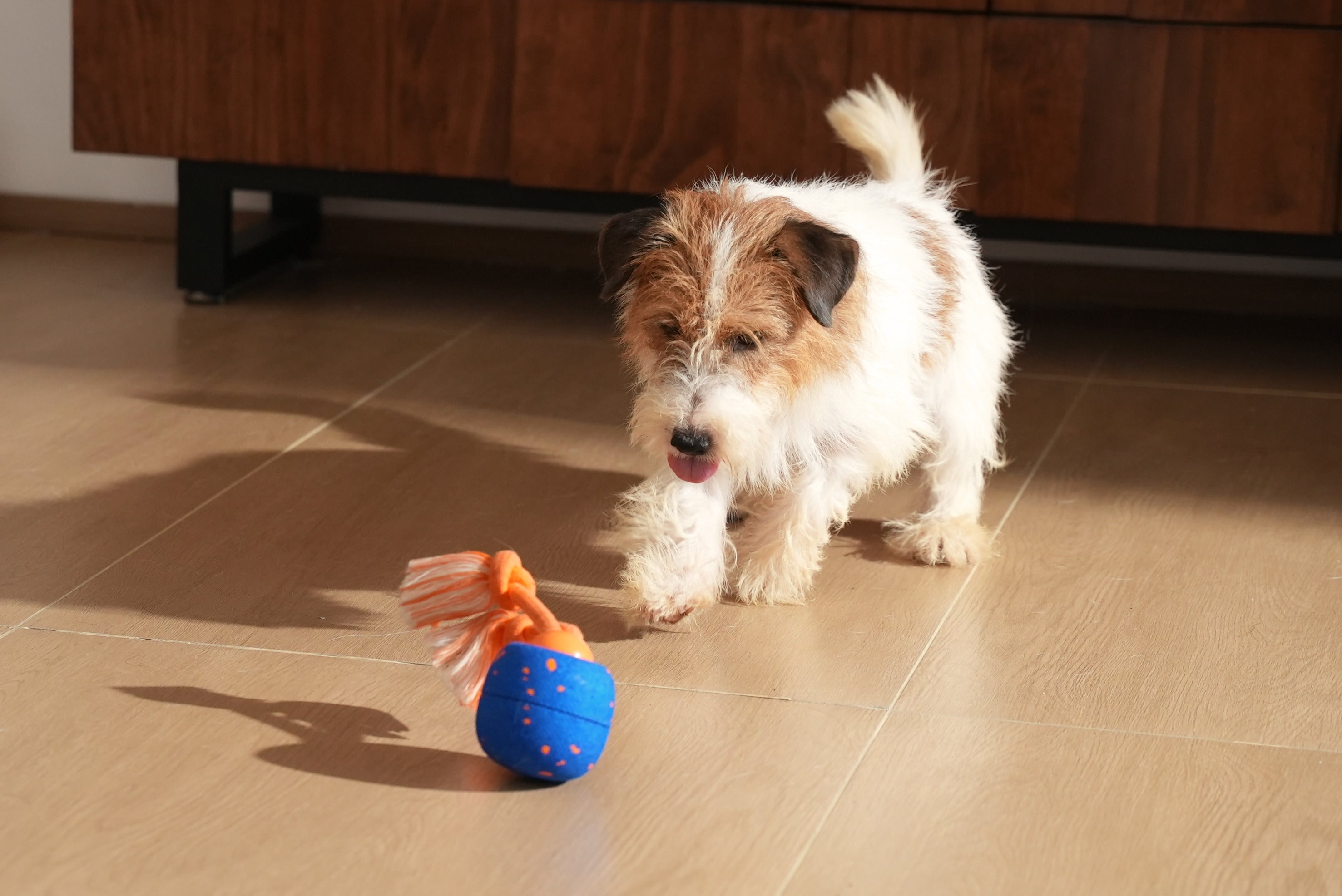
Movement-based toys can be useful for dogs that find chase play rewarding. They are a poor fit for dogs that become more agitated around sudden movement or mechanical sound. Begin in a familiar room, use a short session, and let the dog approach voluntarily.

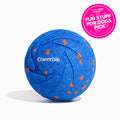
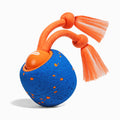
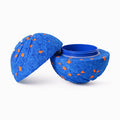
Using Wicked Ball Air Accurately
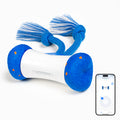
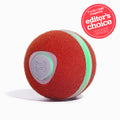
The Wicked Ball Air has three official modes: Gentle, Normal, and Passive. These names describe play settings; they do not correspond to clinical anxiety levels. Owners can try a lower-intensity setting first and observe whether the dog shows loose, voluntary play or signs of avoidance and over-arousal.
No mode is a treatment for stress or a guaranteed route to calm. The toy can provide an activity for dogs that already enjoy this kind of play.

How to Introduce a New Toy
- Place the switched-off toy in the room and allow the dog to investigate.
- Reward calm curiosity without forcing contact.
- Activate the gentlest suitable setting at a distance.
- Keep the first session brief and supervised.
- Stop if the dog freezes, hides, repeatedly retreats, guards the toy, or becomes unable to disengage.
Create a Predictable Calming Routine
A useful routine may include a sniffing walk, a few minutes of reward-based training, a food puzzle or supervised interactive play, and a quiet resting area. Rotate activities based on the dog’s preferences. Predictability and gradual practice matter more than maximizing intensity.
If you plan to use a special food toy during short absences, introduce it while you are home and confirm that the dog can use it safely. Electronic and movement-based toys should follow the product’s supervision guidance.
When to Ask for Help
Speak with a veterinarian if anxiety appears suddenly, worsens, or comes with changes in sleep, appetite, mobility, or elimination. Seek qualified behavioral support for panic, self-injury, repeated escape attempts, or distress that prevents the dog from eating or settling.
The Best Toy Is the One the Dog Can Use Comfortably
There is no universal “best toy for anxiety.” The right choice fits the dog’s size, play style, health, and trigger level. Use toys to support a broader care plan, watch the dog’s response, and keep claims realistic: enrichment can help create positive activity, but anxiety deserves proper assessment.


Leave a comment
All comments are moderated before being published.
This site is protected by hCaptcha and the hCaptcha Privacy Policy and Terms of Service apply.