














Indoor life protects cats from many outdoor risks, but a safe home still needs opportunities to climb, hide, scratch, explore, and play. Toys are useful, but enrichment is broader than filling a basket with objects. A good routine gives a cat choices and lets it practice parts of the hunting sequence in a safe setting.
The Feline Veterinary Medical Association recommends simulated hunting, foraging opportunities, play, safe territory, and vertical space for indoor cats. The best plan combines these resources instead of expecting one toy to do everything.
How to Tell Whether Your Cat Needs More Enrichment
Possible signs include frequent attention-seeking, attacking hands or ankles during play, repeated nighttime activity, overeating, or quickly losing interest in the environment. These behaviors do not prove boredom, and sudden behavior changes can also signal pain or illness. Contact a veterinarian when a change is new, severe, or accompanied by altered appetite, litter-box use, grooming, or mobility.
What Makes a Cat Toy Engaging?
Movement that invites stalking and pouncing
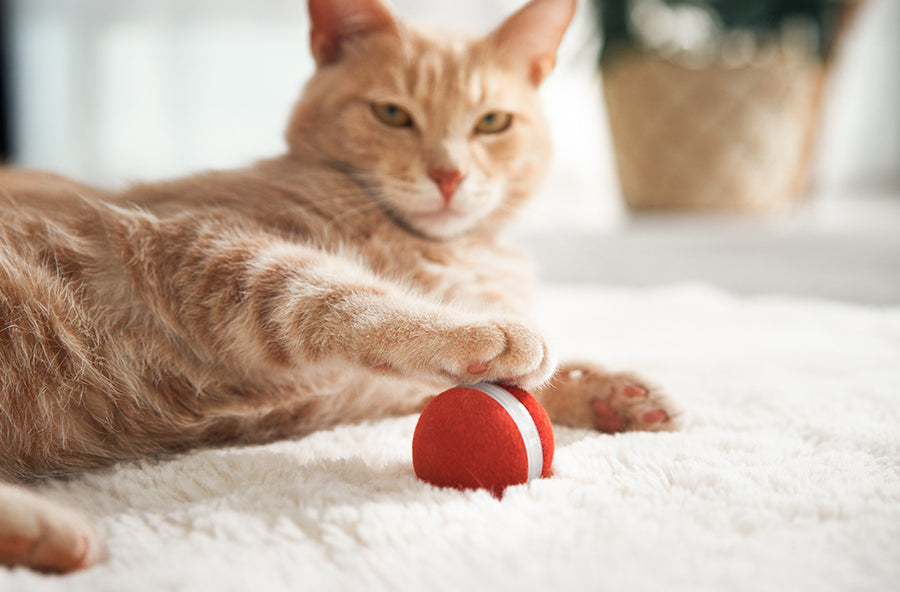
Cats often respond to movement that starts, stops, and changes direction. Wand toys and responsive balls can create opportunities to watch, stalk, chase, and capture. Let the cat “catch” the toy regularly so the game has a satisfying endpoint.

Variety without clutter
Leaving every toy out can make them part of the background. Keep a small selection available and rotate toys every few days. A familiar toy can feel new again after time out of sight.
Control and choice
Do not force a cat to interact. Provide an escape route and a safe place. A cat that watches from a distance may still be assessing the toy. Start with slower movement and allow the cat to decide whether to approach.
Using Wicked Ball M3 Correctly
The Wicked Ball M3 has three official modes:
- Hybrid Mode: vibration or faster rolling.
- Bounce Mode: responds to a tap with bouncing movement.
- Roll Mode: uses shaking or gentler rolling movement.
Choose a setting based on the surface and the cat’s response, and supervise play as directed on the product page.
A Simple Daily Enrichment Routine
Morning: a short hunt-style session
Use a wand or supervised interactive toy for five to ten minutes. Begin slowly, add short bursts of movement, and allow several successful catches. Finish before the cat loses interest.
Midday: independent choices
Provide safe resting spots, a window view where appropriate, scratching surfaces, and a small puzzle feeder or hidden portion of the daily food allowance. In multi-cat homes, separate resources so one cat cannot block another.
Evening: owner-guided play
Repeat a short play session and follow it with part of the cat’s normal meal if that suits the household routine. Short, regular sessions are often more effective than one long session.
Safety Checks Before Play
- Inspect toys for loose parts, damaged covers, exposed threads, or cracks.
- Use the toy on a stable floor with space away from stairs, water, and fragile objects.
- Supervise play and remove damaged toys.
- Count treats and puzzle food within the cat’s normal daily intake.
- Avoid placing a moving toy on a high surface where it could fall.

Enrichment Is an Environment, Not a Gadget
Interactive toys can add useful movement and novelty, but they work best alongside hiding places, vertical space, scratching options, predictable human interaction, and separate resources in multi-cat homes. Observe what your cat chooses, rotate activities, and build a routine around those preferences.

Leave a comment
All comments are moderated before being published.
This site is protected by hCaptcha and the hCaptcha Privacy Policy and Terms of Service apply.