



Cat

5 Pet Tech Trends to Watch at CES 2026

5 Pet Tech Trends to Watch at CES 2026
The Consumer Electronics Show (CES) has always been a crystal ball for the future of our daily lives. In recent years, pet technology has moved from the sidelines to center stage. As we look toward CES 2026, the narrative is shifting. We are moving away from simple "connected" gadgets toward a new era of predictive wellness and pet-centric empathy.
For today’s pet parents, the "smart" label isn't enough anymore. The industry is responding with innovations that prioritize biological needs over mere mechanical convenience. Here are the top five trends set to redefine pet care at CES 2026.

1. From Monitoring to Predictive Wellness: The AI Diagnostic Leap

In the past, pet tech focused on what had already happened—how many steps a dog took or how many times a cat used the litter box. In 2026, the focus has pivoted to what might happen next.

Behavioral Data as the Vital Sign

AI is now trained to detect "micro-shifts" in behavior that the human eye often misses. Cats naturally mask pain, so subtle changes in eating speed or visiting frequency can be early signs of distress. By setting a personalized baseline for each pet, smart sensors can flag anomalies. For instance, a 20% drop in food intake or a sudden spike in thirst can precede clinical symptoms of urinary or metabolic issues by several days.

The Shift to Preventive Care

Rather than just a digital logbook, AI diagnostic tools now act as a bridge between the home and the clinic. We expect more platforms to offer real-time triage. This helps owners distinguish between a minor upset stomach and a true veterinary emergency, reducing "ER anxiety" for both the pet and the parent.
Visual representation of AI pet health monitoring showing a cat with biometric data overlay and predictive wellness graphs.

2. The Biometric Revolution: Moving Beyond Wearables

For a decade, the "smart collar" was the standard for identification. However, 2026 marks the beginning of the "unplugged" pet. The industry is moving toward contactless recognition. Experts now recognize that many pets—especially cats—find collars invasive, uncomfortable, or even hazardous.

"Naked" Recognition: The Death of the RFID Tag

The standout technology this year is Face ID for animals. By using high-precision visual sensors, devices can now identify pets based on unique facial contours and coat patterns. This eliminates the need for bulky RFID tags that can snag on furniture or cause "collar shy" behavior in sensitive felines.

Precision in Multi-Cat Households

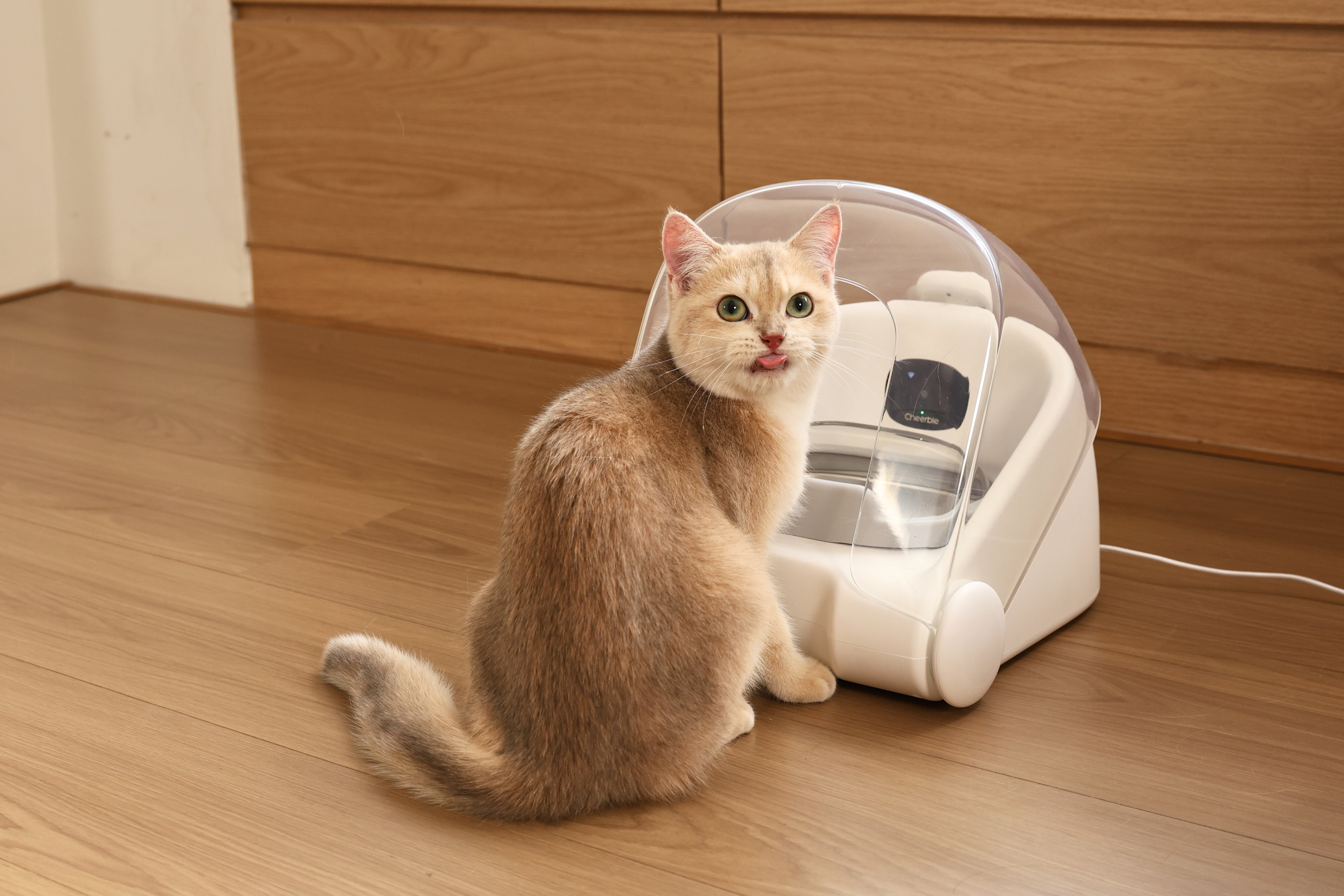
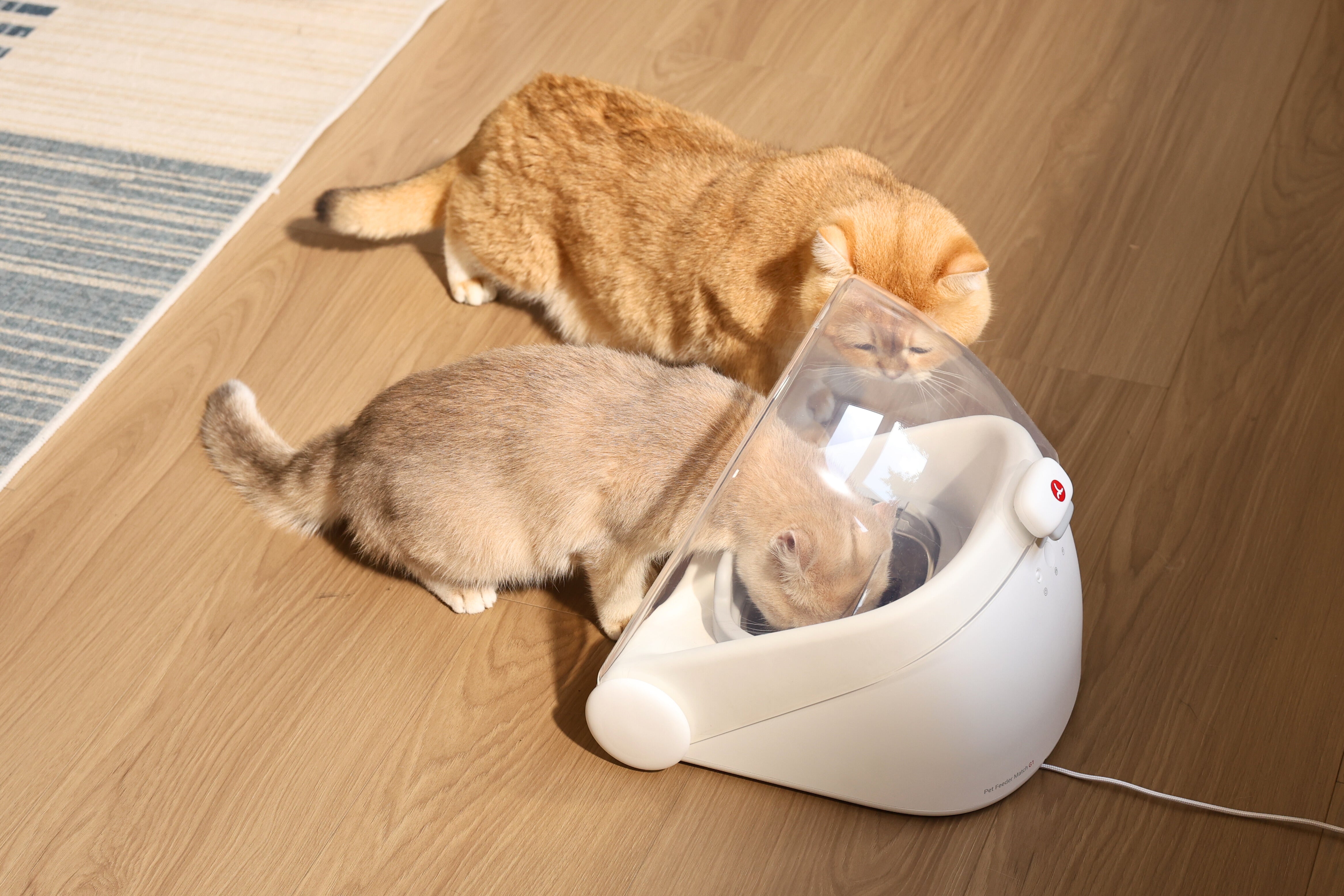
In multi-cat homes, accuracy is vital. Traditional systems often struggled with "food stealing" or cross-contamination of diets. New systems, like the Cheerble Match G1, use proprietary Edge-AI to tell the difference between siblings in milliseconds. This ensures every pet gets its specific nutrition without wearing any hardware.
Close-up of a cat undergoing contactless Face ID recognition with a glowing biometric facial grid for secure identification.

3. The "Freshness" Frontier: Engineering for Real-Food Diets

The "kibble-only" era of automatic feeding is officially over. As pet owners opt for raw, fresh, or wet-food diets, hardware must evolve to handle more than just hard grains.

Automating Feline Hydration and Wet Nutrition

Feline health depends on hydration, yet the smart feeder industry has historically ignored wet food because it’s hard to keep fresh. At CES 2026, we are seeing a "fresh-feeding revolution." Engineers are prioritizing wet food innovation, designing feeders that can safely store and dispense moisture-rich recipes.

Integrated Freshness Control

The challenge of wet food is its shelf life. The next generation of feeders incorporates advanced dual-diet support with insulated compartments and cooling zones. By using replaceable ice packs and airtight seals, these devices keep specialized wet food fresh and safe for hours. This allows owners to maintain complex feeding schedules even when they are away from home.

4. Seamless Integration: Pet Tech in the Matter Ecosystem

One of the biggest frustrations in pet tech has been "App Fatigue." In 2026, the industry is finally tackling this by integrating pet devices into broader smart home ecosystems.

Breaking the "App Barrier"

With the recent release of Matter 1.5, which officially supports AI camera streaming, the industry is moving toward a unified pet dashboard. This means your pet’s health alerts can now appear alongside your home security and climate notifications. Pet care is finally becoming a seamless part of the daily digital routine.

Contextual Awareness via Vision AI

Instead of complex "feeder-to-vacuum" setups, the real trend is cross-device awareness. For example, smart cameras can now "recognize" when a cat is at the feeding station. The system automatically tags that video as a "Feeding Event" in a central timeline. Owners get a holistic view of their pet’s day—combining activity, rest, and nutrition data—without jumping between five different apps.
A unified smart home dashboard showing pet health alerts integrated into the Matter 1.5 ecosystem and cross-device connectivity.

5. Privacy-First Hardware: The Rise of On-Device Processing

As we put more cameras in our living rooms, data security has become a major concern. CES 2026 highlights a significant move toward Privacy-First design.

Breaking the Cloud Dependency

The "cloud-first" model is being replaced by Edge-AI. By processing visual data locally on the device's internal "brain," companies ensure that private video footage never reaches a distant server. This "Privacy by Design" approach is a major selling point for premium pet tech brands.

Resilience and Reliability

Beyond privacy, on-device processing offers a practical advantage: uninterrupted intelligence. Devices that don't rely on the cloud can still recognize pets and dispense food if the Wi-Fi goes down. This reliability is critical for a pet’s health, ensuring the technology serves the pet rather than being a slave to the internet.

Spotlight: Bringing 2026 Trends to Life with Cheerble Match G1

While these trends outline the future, the Cheerble Match G1 is a practical example of how these technologies work together today. It wasn't built just to follow trends; it was designed to solve the real-world friction of multi-cat parenting.

Smart Enough to Stay Private

The G1’s Face ID system is a perfect example of the "Privacy-First" movement. Using Edge-AI, the device identifies pets locally with zero cloud dependency. In a busy home, this means instant, accurate feeding without compromising your family’s privacy—addressing one of the biggest consumer concerns of 2026.

Biology-Driven Design

The G1 also masters the shift toward fresh nutrition. Its integrated cooling zone and whisker-friendly tray show that "High-Tech" can also be "High-Touch." By making wet-food feeding as simple as dry kibble, the G1 aligns technology with the biological needs of the cat. The best innovations are those that feel invisible to the pet but indispensable to the owner.
he Cheerble Match G1: a sleek, next-gen smart pet feeder featuring Edge-AI Face ID and automated wet food feeding.

Conclusion: The Era of Respectful Innovation

The trends at CES 2026 point toward one goal: Respect. Respect for the pet's biology, their health, and the owner's privacy.
Products like the Cheerble Match G1 are no longer outliers. They are the new gold standard.
By combining Face ID precision with a privacy-first architecture, the Match G1 embodies the trends reshaping the industry. Moving forward, the best pet technology won't feel like a "gadget"—it will be a natural, invisible extension of the care we give our furry family members.
Experience the future of pet care at CES 2026, and see how the next generation of smart feeding is ending mealtime chaos for good.


前後の記事を読む

Cheerble World's first "Face ID" Smart Pet Feeder
Cheerble Match G1: New Feeding Solution For Multi-cat Household.

コメントを書く

全てのコメントは、掲載前にモデレートされます

このサイトはhCaptchaによって保護されており、hCaptchaプライバシーポリシーおよび利用規約が適用されます。