


The best water fountain for a large dog is one your dog can reach comfortably, that holds enough water for your real household routine, and that you can clean without a struggle. Capacity matters, but so do tray depth, stability, spill control, noise, power options, and the materials that touch the water.
This guide shows you how to compare those details without relying on vague labels such as “large” or “spill-proof.”
What Large Dogs Need From a Fountain
A large dog does not simply need a small fountain with a bigger tank. The drinking area must let the dog approach naturally, lower its head without crowding its muzzle, and drink without constantly bumping the rim. The unit also needs enough weight and footprint to stay in place when a strong dog drinks quickly or nudges it.
Drinking Height, Access, and Capacity
Start with your dog’s posture. When your dog drinks, the neck should look relaxed and the muzzle should fit over the tray without pressing against a narrow edge. A wide drinking surface can be especially helpful for broad-faced dogs, while tray depth affects how easily a dog can lap without pushing water over the edge.
Height is not universal. A raised surface may feel easier for some dogs, while others prefer a lower station. Compare the fountain dimensions with the bowl your dog already uses comfortably. If your dog has mobility, swallowing, or posture concerns, ask your veterinarian what setup is appropriate.
Capacity is the amount the reservoir can hold, not a promise about how many days it will last. A dog’s intake changes with body size, diet, exercise, temperature, health, and whether the household has more than one pet. Fresh, clean water should always be available, and a noticeable change in drinking behavior is a reason to contact a veterinarian, according to VCA Animal Hospitals.
Capacity and Refill Frequency
A large-capacity dog fountain reduces how often the reservoir runs low, but it does not remove the need for daily checks. Look at how much water your household uses during a normal 24-hour period, then leave a practical margin for warm weather, exercise, evaporation, and accidental splashing.
For a better estimate, fill the current bowl or fountain to a measured level, record any top-ups, and check what remains at the same time the next day. Repeat this over several ordinary days. The result is more useful than a generic “days per refill” claim because it reflects your dog, food routine, home temperature, and cleaning schedule.
One Large Dog vs. Multi-Dog Homes
For one dog, choose a capacity that covers the dog’s observed daily use with reserve water left in the tank. For two or more dogs, add their combined use and consider peak drinking times. Multiple dogs can empty a tray quickly even when the reservoir looks large on paper.
Also consider access. A single fountain may become crowded or guarded. If one dog blocks the station, place a second water source in another quiet area. The goal is reliable access, not simply the largest possible tank.
Stability and Spill Control
Large dogs often drink with more force than small pets. That makes the base, tray, floor surface, and placement as important as the reservoir. A broad footprint is generally harder to tip than a tall, narrow design. A deeper or wider tray gives the tongue more room to lap and can help contain ordinary splashes.
No open drinking station can guarantee a dry floor. A fountain described as spill-resistant should reduce common splashing through its tray shape and water level; it cannot control every drinking style, paw, tail, or collision. Place the fountain on a level surface with clearance around it, and use a washable non-slip mat if your dog is an enthusiastic drinker.
Base Design, Tray Size, and Placement
Check whether the unit slides when gently pushed on your actual floor. Tile, wood, and textured mats behave differently. Route any cable where a dog cannot catch it with a paw or chew it. Avoid narrow passages where people or pets may bump the fountain, and keep the drinking station away from litter boxes, cleaning chemicals, and direct heat.
Materials and Cleaning
Focus on every surface that regularly touches water: the drinking tray, reservoir, filter housing, channels, and seals. Smooth, removable parts are usually easier to inspect than tight corners or long internal tubes. Stainless steel can provide a durable, easy-to-wipe drinking surface, while plastic components still need regular washing and inspection for scratches, residue, or damage.
Water-Contact Surfaces and Maintenance
A fountain should come apart far enough for you to reach the areas where water circulates. Before buying, look for a clear cleaning guide, replacement-filter availability, and instructions for any part that cannot go in a dishwasher. The easier the routine, the more likely it is to happen on schedule.
Empty and refresh the water regularly, remove visible hair or debris, and clean according to the manufacturer’s instructions. A filter supports water quality, but it does not replace washing the tank and tray. If you notice slime, odor, discoloration, or reduced flow, stop and clean the unit rather than waiting for the next planned service.
Noise, Power, and Water Flow
A fountain only helps if your dog is willing to use it. Some dogs prefer a gentle, nearly still surface; others are drawn to moving water. Adjustable flow modes let you test what attracts your dog without creating unnecessary spray. Listen for motor or pump noise, vibration against the floor, and the sound level as the tank approaches its minimum line.
Power design affects placement and resilience. A corded fountain can run continuously near an outlet, while a rechargeable model offers more freedom from exposed cables. Battery operation is not the same as automatic backup: check whether the model continues operating during an outage, how its modes change when plugged in, how long a charge lasts under the mode you plan to use, and how the battery status is shown.
How the Cheerble Elfin D1 Pro Fits These Criteria
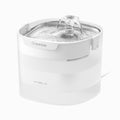
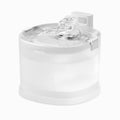
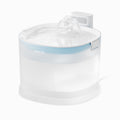
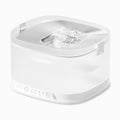
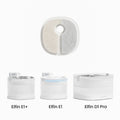
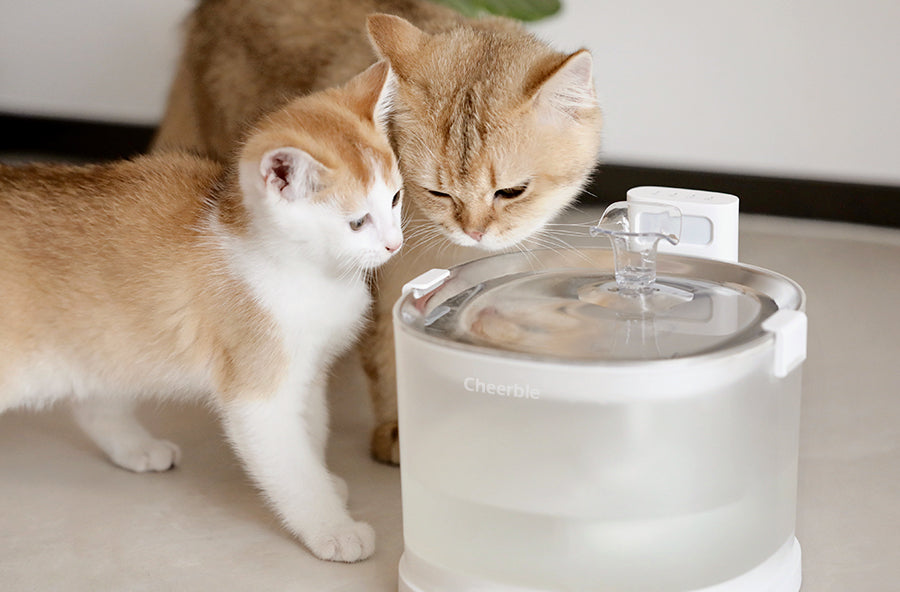
The Cheerble Elfin D1 Pro has a 4-liter reservoir, a stainless steel drinking tray, and a pumpless design that separates the drive mechanism from the water tank. The current product specifications list a 12 × 10 × 7-inch body, a 5.4-inch drinking height, and a 1.8-kilogram unit weight.

Its tray is designed to provide a wide drinking area and reduce ordinary spills. It is available in wired and wireless versions. The wireless version includes a 5000mAh battery and Smart, Continuous, and Timer modes; the wired version provides Continuous and Timer modes. These details make it a useful candidate for many medium-to-large dogs, but owners should still compare the measurements with their dog’s comfortable posture and confirm that the tray suits the dog’s muzzle and drinking style.
Large-Dog Buyer Checklist and FAQ
| What to check | What a useful answer looks like |
|---|---|
| Drinking access | Your dog can approach, lower its head, and fit its muzzle over the tray comfortably. |
| Capacity | The reservoir covers measured household use with a safety margin and is checked daily. |
| Stability | The footprint and surface keep the fountain from sliding or tipping during normal use. |
| Spill control | The tray reduces ordinary splashing without promising a completely dry floor. |
| Cleaning | Water-contact parts are removable, visible, and easy to reach on a repeatable schedule. |
| Power | The cord, battery, modes, and outage behavior match the planned location. |
| Replacement parts | Compatible filters and wear parts are available, with a clear replacement schedule. |
Is a 4-liter fountain large enough for a big dog?
It may be, but capacity alone cannot answer the question. Measure your dog’s normal use, include other pets, and keep reserve water available. Check the level and water condition every day even when the reservoir is not empty.
Are dog water fountains really spill-proof?
No open fountain can prevent every splash. Tray depth, tray width, stable placement, and a non-slip mat can reduce mess, but the result still depends on the dog’s drinking style and the surrounding space.
Is stainless steel better than plastic?
Stainless steel is durable and easy to wipe when it is properly finished and maintained. Many fountains also use food-contact plastic in the reservoir or housing. The practical test is whether all water-contact parts are safe for their intended use, remain undamaged, and can be cleaned thoroughly.
Does a filter mean I can clean the fountain less often?
No. Filters catch certain debris and support water quality, but they do not wash the tray, tank, seals, or channels. Refresh the water and clean the fountain according to its instructions, with extra attention when several pets share it.
What if my dog refuses to use a new fountain?
Keep the familiar water bowl available while the dog investigates. Start with a gentle flow, place the fountain in a quiet location, and reward calm approaches. Never restrict water to force adoption.
A large-dog fountain should make daily hydration easier to manage without adding hidden maintenance. Measure first, compare the details your dog actually touches, and choose the design you can keep clean and full every day.


Leave a comment
All comments are moderated before being published.
This site is protected by hCaptcha and the hCaptcha Privacy Policy and Terms of Service apply.