

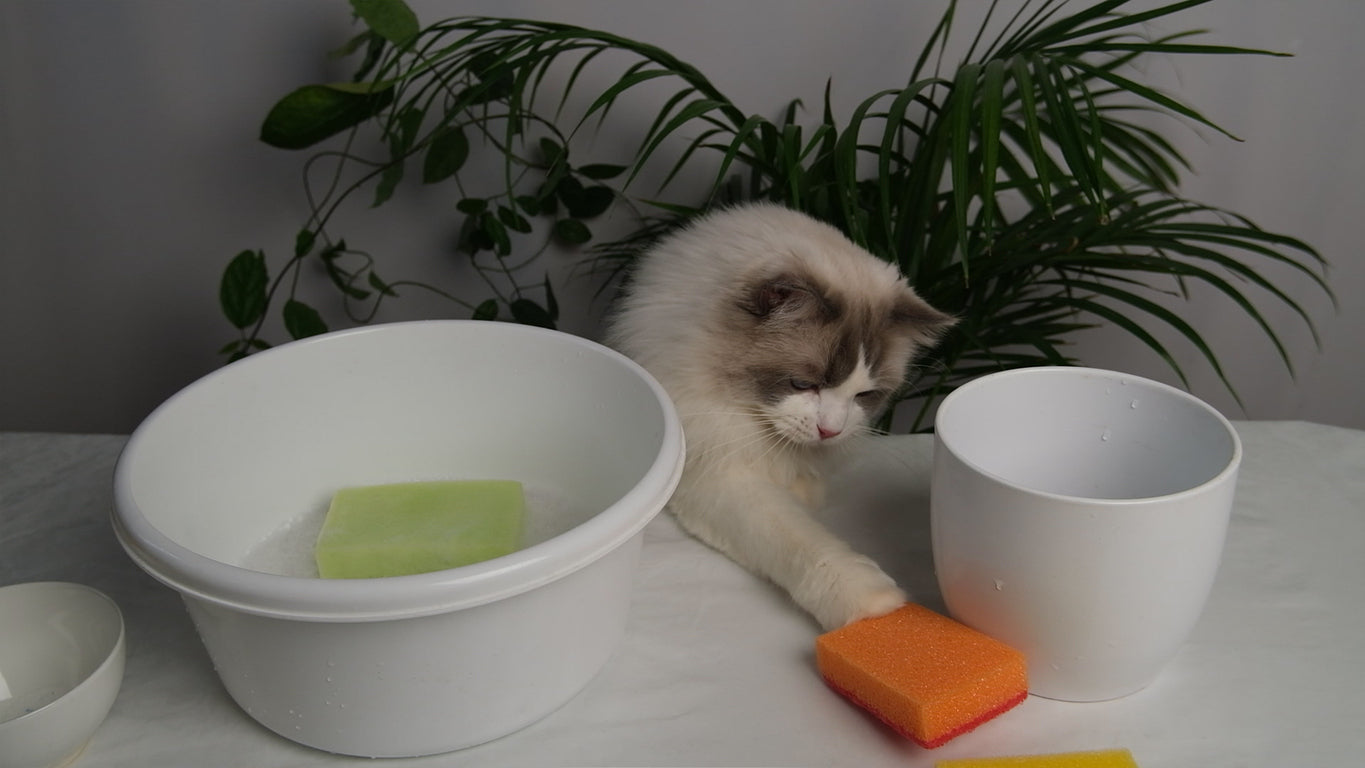
Quick Answer:
That slimy film in your pet’s water bowl is biofilm, a protective bacterial colony that thrives in stagnant water and hidden pump parts. Traditional fountains with submersible pumps are breeding grounds for this bacteria, which can lead to feline chin acne, digestive upset, and water avoidance. The solution is a Pumpless™ fountain utilizing MagDrive™ technology. By removing the internal pump, MagDrive™ fountains eliminate "dead zones" where bacteria hide, making the device fully accessible for deep, daily cleaning and ensuring your pet always has access to fresh, safe water.
Have you ever gone to refill your pet’s water bowl and felt a slippery, slimy texture on the inside?
It is not just hard water residue or soap film. That slick coating is a biological issue that every pet owner eventually encounters.
As summer heat approaches, your pet needs to drink more water than ever to prevent dehydration and support healthy kidney function. While we focus on keeping their bowl full, we often overlook the quality of the water itself. That slimy film is not just gross; it can harbor bacteria that directly impact your pet’s health.
What Exactly Is This Slimy Film?
If you have ever wondered why your cat or dog’s bowl feels slippery even after a quick rinse, you are dealing with biofilm.
The Science of Biofilm
Biofilm is not merely "dirt." It is a complex, living matrix of microorganisms that adhere to surfaces submerged in water. It acts like a shield, making the bacteria colony resistant to simple water rinses or even basic dish soap. Once this "living" layer forms, it becomes a permanent breeding ground for bacteria unless it is physically scrubbed away.
Why It Forms So Quickly
Every time your pet drinks, they introduce saliva, food particles, and hair into the water. This organic matter provides the perfect "fuel" for bacteria. Because water dishes are often left out at room temperature, they provide the ideal conditions for these colonies to multiply into the slippery film you feel within just a few hours.

The Silent Threat: How Biofilm Impacts Pet Health
You might think that because your pet licks things off the floor, a little bit of slime in their water is harmless. However, constant exposure to concentrated bacteria can lead to several health issues that often go unnoticed by owners until they become severe.
Digestive Upset and Weakened Immunity
When your pet drinks from a bowl covered in biofilm, they are consuming a high load of bacteria. This can lead to unexplained digestive upset, vomiting, or diarrhea. For pets with sensitive stomachs, the bacterial count in a neglected water fountain is often enough to cause persistent discomfort and weaken their immune system over time.
Skin Issues and Chin Acne
Have you noticed blackheads or red bumps on your cat’s chin? This is commonly called Feline Chin Acne, and it is frequently linked to dirty water or food bowls. When a pet presses their face against a bowl coated in bacteria, those microbes transfer directly to their skin, leading to irritation, localized infections, and significant discomfort.
Hydration Avoidance
Pets have a much more acute sense of smell and taste than humans. They often refuse to drink water that has a "stale" or "off" flavor caused by bacterial biofilms. In the summer, if your cat or dog avoids their water source because it tastes bad, you are effectively risking their hydration levels, which is a major contributor to kidney disease.
Why Traditional Water Fountains Are Biofilm Magnets
Many pet owners switch to automatic fountains to encourage their pet to drink more. While the flowing water is a great concept, the mechanical structure of most traditional fountains is a major design flaw that actually hides the biofilm problem.
The Problem with Hidden Dead Zones
Traditional fountains use a submersible electric pump to move water. These pumps require narrow intake tubes, internal chambers, and plastic impellers that are almost impossible to reach with a standard cleaning brush.
Over time, these internal components become the perfect breeding ground for biofilm. You may clean the visible bowl, but the bacteria continue to multiply inside the hidden pump, effectively "poisoning" the water as it circulates back into the tray.
Out of Sight, Out of Mind
Because these pumps are often encased in plastic housing, most owners forget to clean them until the motor starts to fail or the water flow slows down. By the time you notice a problem, the biofilm colony has already reached a massive size, turning your "clean" fountain into a constant source of contamination.

The Game Changer: Why Pumpless™ Fountains Are Cleaner
The evolution of pet care technology has finally addressed the pump issue. Cheerble has introduced a revolutionary design that removes the pump entirely from the water path.
MagDrive™ Technology Explained
Our MagDrive™ technology uses magnetic force to circulate water. By eliminating the traditional submersible pump, we have removed the most common "dead zone" in pet fountains. Without an internal impeller or complex tubing, there is nowhere for biofilm to hide. Every surface that touches your pet’s water is now open, accessible, and incredibly easy to wipe down.

The Stainless Steel Advantage
Beyond the pump design, materials matter. Plastic bowls are porous, which makes them easier for bacteria to colonize. Our stainless steel water trays are non-porous and resistant to scratches. This means that even with daily use, biofilm cannot grip the surface as easily as it does on plastic, keeping your pet’s water fresher for longer.
Essential Maintenance for Your Pet Fountain
Even with advanced technology, consistency is the key to summer pet hydration. Keeping the water source clean is the best way to prevent dehydration.
How to Clean Your Fountain Properly
You should perform a full cleaning of your pet’s fountain at least once a week. Use a pet-safe, mild detergent and a soft sponge. Because our fountains are designed for accessibility, you can scrub the entire interior in seconds. Always rinse thoroughly to ensure no soap residue remains.
Watch for Signs of Dehydration
Summer heat increases the risk of dehydration, which is a common trigger for kidney disease. If you notice your pet is lethargic, has dry gums, or is avoiding their water, it is time to check the bowl. Often, a pet refuses to drink simply because the water tastes like stale biofilm. Switching to a fountain that is actually clean can make a massive difference in their daily water intake.
Upgrade Your Pet’s Drinking Experience Today
Clean water is the foundation of your pet’s longevity. If you are tired of scrubbing slime out of hard-to-reach pump parts, it is time for a change.
Our Cheerble E1+ for cats and D1 Pro for dogs are designed to be the cleanest, most reliable way to keep your pets hydrated. By removing the pump, we have removed the hassle of maintenance and the risk of hidden bacteria.

Ready to make the switch to a smarter, healthier way to hydrate? Visit Cheerble.com today to explore our range of Pumpless™ pet fountains and give your pets the clean water they deserve.

コメントを書く
全てのコメントは、掲載前にモデレートされます
このサイトはhCaptchaによって保護されており、hCaptchaプライバシーポリシーおよび利用規約が適用されます。