

Quick Answer
Managing a multi-pet family with both cats and dogs requires strict mealtime boundaries to prevent diet cross-contamination. Dogs often scavenge calorie-dense cat food, leading to obesity or pancreatitis, while cats risk malnutrition if their meals are stolen.Traditional feeding tips like elevated bowls or pet gates are inconvenient and easily bypassed by persistent pets. The Cheerble Match G1 provides a cat feeder designed specifically to keep dogs out. Using Edge AI and Face ID, it only grants access to the authorized feline and instantly locks upon detecting a canine face. This ensures medical diets are protected with zero latency and 100% data privacy.
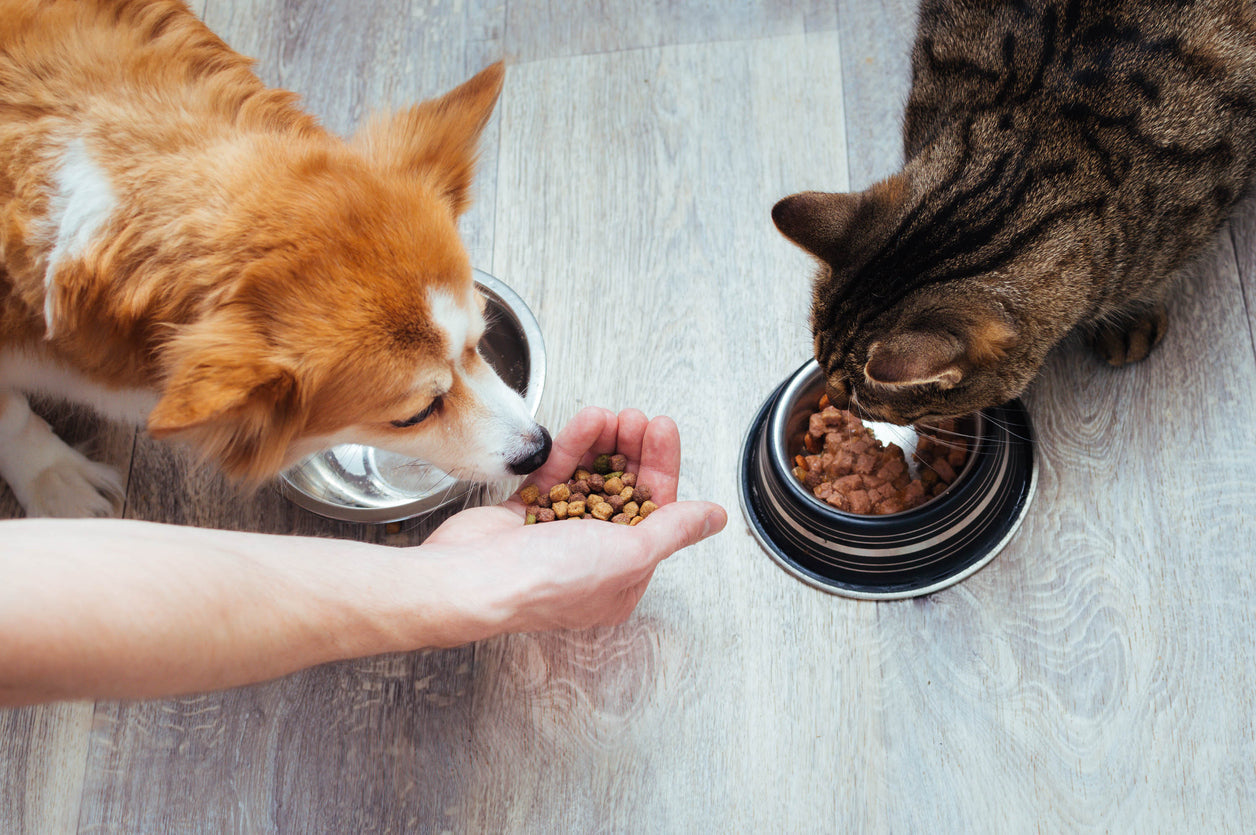
If you have both cats and dogs, you know the drill. You pour the cat's food. You turn your back for ten seconds. You turn around to find your dog's face buried in the bowl.
Welcome to the inter-species food war. It's exhausting, it's relentless, and in 2026, it's completely solvable.
The Inter-Species Food War: A Daily Struggle
Why "Sharing" is Dangerous
In the wild, dogs are opportunistic scavengers. They eat fast and eat everything. Cats are territorial slow eaters who prefer to graze throughout the day.
When you combine these species in a multi-pet family, you get conflict. The dog sees the cat's bowl as a bonus meal. The cat sees the dog as a threat.
The Surveillance Fatigue Problem
Most owners hover. You stand over bowls playing referee. You separate pets into different rooms. You create feeding schedules requiring military precision.
This is "surveillance fatigue." You're spending mental energy on something that should be automatic. And when you inevitably forget to close a door, the food stealing happens anyway.

The Hidden Dangers of "Bowl Swapping"
Cat Food for Dogs: The Pancreatitis Risk
Cat food has higher fat and protein than dog food. For cats, this is essential. For dogs, it's dangerous.
Regular consumption of cat food puts dogs at risk for pancreatitis in dogs—painful inflammation of the pancreas. Clinically, pancreatitis in dogs presents as vomiting and abdominal pain, often requiring emergency intervention to prevent organ failure.
Even without pancreatitis, the calorie density leads to rapid weight gain. An overweight dog faces joint problems, diabetes, and shortened lifespan.
Dog Food for Cats: The Taurine Deficiency
Dog food lacks taurine, an essential amino acid cats cannot produce themselves. Over time, taurine deficiency can lead to heart disease and vision problems. By the time symptoms appear, damage is often irreversible.
The Medical Crisis Scenario
The critical danger? A dog consuming a cat's kidney care or prescription diet food. Your cat doesn't get their treatment, and your dog ingests medication not meant for them. This isn't inconvenient. It's a veterinary emergency.
In a multi-pet family managing cat medical diets, cross-contamination is life-threatening.
Traditional Solutions and Why They Fail in 2026
Elevated Feeding Stations
The classic advice is: put the cat's bowl on a counter where the dog can't reach.
This works until many dog breeds learn to jump. German Shepherds, Golden Retrievers, even determined Beagles can reach "high ground." And elevated feeding creates new problems. Older cats with arthritis struggle to jump.
Microchip Feeders and RFID Systems
RFID feeders like Surefeed detect the cat's microchip and open the door. But they have a fatal flaw: slow closing mechanisms.
The door takes 2-3 seconds to shut after the cat leaves. A fast dog can push the cat aside and "tailgate" before it closes. The technology works on paper. In real homes, it fails.
Manual Pet Gates
Physical barriers work—until someone forgets to close the gate. Gates restrict your home's flow and require perfect human compliance. And humans aren't perfect.

Match G1: The "Dog-Proof" Guardian via Face ID
Visual Identity is the Game-Changer
The Match G1 doesn't look for a tag. It looks for a face.
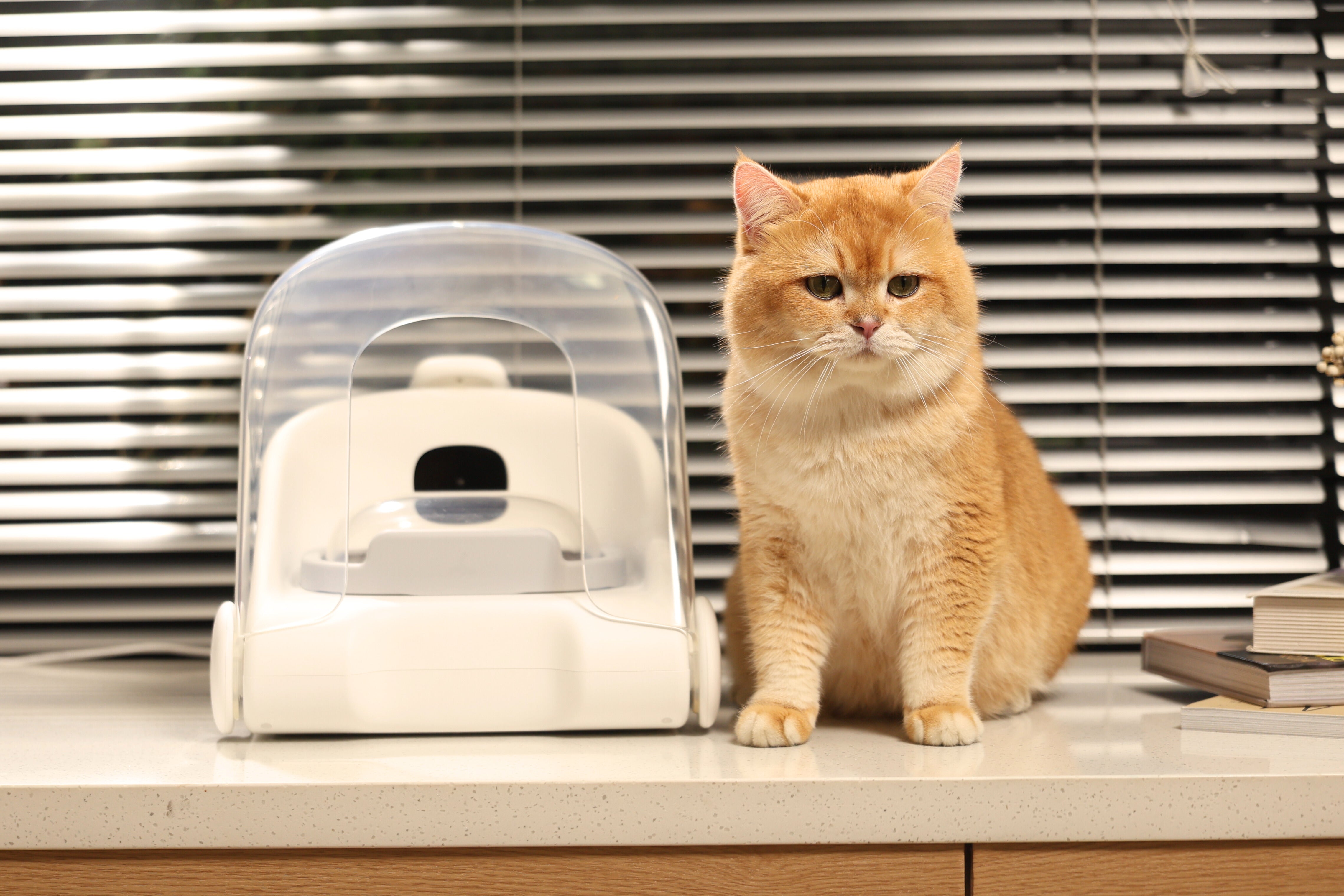
When your cat approaches, the AI-feeder analyzes facial structure: cheek width, eye spacing, ear shape. Recognition happens in under 0.1 seconds. The door opens.
When your dog approaches? The system detects a canine muzzle. Longer snout. Different eye placement. Wrong facial geometry. The bowl stays locked. This is the first cat feeder that actually keeps dogs out.
Zero-Latency Lockdown
Thanks to Edge AI, identification happens in milliseconds. The moment your cat finishes and steps away, the door closes. No delay window for your dog to exploit.
Traditional RFID feeders have that 2-3 second delay. That's enough time for a fast dog to strike. The Match G1 eliminates that window entirely.
Collar-Free Safety
No collar or tag needed. No batteries to replace. No physical dependency.
Your cat approaches naturally. The Face ID recognizes them. Your dog can stand there watching—the system only responds to the registered feline face.
Proactive Defense: Why Visual Identification Beats RFID
The Proximity Problem with RFID
RFID feeders only know if the chip is nearby. They don't know which mouth is in the bowl.
If your dog stands next to your cat when the door opens, the feeder can't tell the difference. The tag says "cat is here," but the dog is eating. This is the "tailgating problem," and why RFID fails in cat and dog homes.
Naked Recognition: Face-Only Access
The Match G1 uses Naked Recognition to solve this. It actively verifies the face in the feeding zone.
Even if your dog stands right next to the cat, the smart cat feeder only opens for the recognized feline face. The system distinguishes between species—not just individuals. Match G1's Naked Recognition represents the gold standard in AI-feeder security, ensuring access is based on biological identity, not just proximity.
Edge AI = Privacy + Speed
All processing happens locally on the NPU. No cloud upload. No internet dependency. No privacy concerns.
The Edge AI architecture delivers security and speed. Your cat gets instant access. Your dog gets instant denial. Your data stays inside the hardware.

Conclusion: Reclaiming Your Living Space
A harmonious multi-pet family doesn't need more gates or supervision. It needs smarter infrastructure. The Match G1 allows your cat and dog to coexist without the constant "food war." Your cat gets meals undisturbed. Your dog learns the bowl is inaccessible. You stop hovering.
For homes managing cat medical diets, this isn't convenience. It's essential pet health protection. When your cat's kidney care food can't be stolen, you ensure treatment compliance. When your dog can't access high-fat cat food, you prevent pancreatitis in dogs.
Secure Your Early-Bird Access
The Cheerble Match G1 launches in March 2026. Visit our Pre-order Landing Page to join the waitlist and secure exclusive early-bird pricing.
Your cats and dogs can coexist peacefully. The technology is ready. Are you?


Leave a comment
All comments are moderated before being published.
This site is protected by hCaptcha and the hCaptcha Privacy Policy and Terms of Service apply.