








For many cat owners, a small hiss or a playful swat near the food bowl is seen as normal "sibling rivalry." However, in the feline world, these minor interactions are often symptoms of a much deeper problem: resource competition.
Cats are biologically programmed to view access to food as a matter of survival. When forced to share a feeding space, many cats live in a state of constant, low-grade tension. This hidden stress does not just ruin the peace of your home; it actively erodes your cat's long-term health and psychological well-being.
Quick Answer Food competition in multi-cat homes occurs when cats are forced to share feeding spaces, leading to chronic stress, anxiety, and long-term health issues. Because cats are solitary predators, lack of individual feeding access often results in resource guarding, aggression, and stress-related illnesses.
Food Competition and Survival Instinct in Cats
In the wild, a cat does not share its kill. This instinct remains unchanged in our modern living rooms, creating a fundamental conflict between a cat's nature and the way we often feed them.
The Myth of Abundance
One of the biggest misconceptions among pet parents is the idea that "plenty of food equals zero stress." You may fill the bowls to the brim. But for a cat, the quantity of food is secondary to the security of the food source. In a cat's mind, if they cannot control the access to their meal, that meal is at risk.
This perceived scarcity triggers a persistent release of stress hormones, even when the bowl is overflowing. To a cat, the presence of another cat near their food is a challenge to their territory and their survival.
Evolutionary Roots of Resource Protection
As solitary predators, cats lack the social cues that pack animals (like dogs) use to negotiate sharing. They do not have a natural "waiting in line" instinct. When two cats are forced into a shared feeding area, they are forced into a confrontation. This is why many cats develop guarding behaviors. They sit near the food bowl not to eat, but to prevent others from doing so. This behavioral tension is the foundation of chronic anxiety in multi-cat households.

Signs of Food-Related Stress in Cats
Feline stress is often silent. Because cats are masters of masking discomfort, owners must learn to read the subtle body language that signals mealtime anxiety before it escalates into a medical crisis.
The "Lookout" Posture
Next time your cats eat, watch their bodies closely. A relaxed cat eats with a soft posture, focused entirely on the food. A stressed cat, however, assumes the lookout posture. They may eat while frequently looking over their shoulder, their ears might be pinned back or rotating like radar dishes, and their tail may twitch rhythmically.
These are signs of a cat that is in "high alert" mode. They are not enjoying their meal; they are monitoring a potential threat.
Post-Meal Aggression and Social Tension
The effects of food competition often spill over into the hours between meals. If you notice an increase in hissing, chasing, or "random" swats in the hallway, the root cause may be the tension built up during feeding time. This displaced aggression occurs because the stress of the meal has no outlet, leading to a breakdown in the social bond between your pets. Over time, this can turn a friendly household into a collection of stressed individuals living in a state of cold war.
How Food Stress Affects Cat Health
Chronic stress is not just a mental state; it is a physical poison. The internal response to food competition can lead to severe medical conditions that require expensive veterinary intervention.
From Cortisol to Chronic Disease
When a cat feels threatened, their body produces cortisol, the primary stress hormone. While cortisol is useful for short-term survival, chronic elevation of this hormone suppresses the immune system. This makes your cat more susceptible to infections and is a leading trigger for Feline Idiopathic Cystitis (FIC). It is a painful and dangerous inflammation of the bladder. In many cases, a cat struggling with urinary issues is actually a cat struggling with the stress of the food bowl.
The "Scarf and Barf" Cycle Re-examined
We often blame "scarf and barf" on the texture of the kibble or the height of the bowl. However, the psychological driver is often anxiety-driven eating. The cat feels the need to bolt their food as fast as possible to prevent a housemate from stealing it. This rapid ingestion of food and air leads to immediate vomiting. Without addressing the underlying competitive pressure, physical changes to the bowl will rarely solve the problem.

Creating a Conflict-Free Feeding Environment
To restore harmony, owners must change the environment to match the cat's biological needs. The goal is to provide every cat with the absolute certainty that their meal belongs to them and them alone.
Breaking the Visual Line of Sight
One of the most effective ways to reduce immediate stress is to ensure cats cannot see each other while eating. In a natural setting, a cat eats in a hidden, secure location. By placing feeding stations in different rooms or behind partitions, you remove the visual trigger of competition. This allows the cat’s nervous system to shift from "fight or flight" back to "rest and digest."
Leveraging Edge AI Smart Feeders for Psychological Security
From a behavioral science perspective, the only reliable way to eliminate food-related conflict is structural change. Training and correction alone are rarely effective. Each cat must have guaranteed and exclusive access to food.
As long as multiple cats compete for the same feeding space, stress responses will continue to appear. Resource guarding will emerge regardless of personality or temperament. This is a biological pattern, not a training issue.
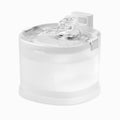
This is the behavioral problem Cheerble Match G1 was designed to address. By using individual recognition technology, the feeder ensures that each cat can only access their own portion of food. The competitive trigger is removed at the source.
Instead of managing conflict after it happens, the system prevents it from forming in the first place. The result is a feeding environment that aligns with cats’ natural need for territorial security.

Conclusion: Harmony Starts at the Bowl
In multi-cat households, food competition is not a minor behavioral issue. It is a primary source of chronic stress, anxiety, and long-term health risks for cats.
Cats are solitary predators by nature. Shared feeding environments often lead to resource guarding. They also create uneven nutrition and persistent psychological pressure.
Reducing food competition requires more than observation or feeding schedules. The most effective solution is to build a conflict-free feeding system. Each cat must have guaranteed individual access to food.
When competition is removed at the structural level, both physical health and emotional well-being improve. For most households, this is the foundation of long-term harmony between cats.


Leave a comment
All comments are moderated before being published.
This site is protected by hCaptcha and the hCaptcha Privacy Policy and Terms of Service apply.